

Case study · Hidden leak & timber decay
Hidden Timber Decay Caused by Long-Term Pipe Leak
Investigation · Structural drying · Timber repairs · Full redecoration
A concealed pinhole pipe leak within a timber stud wall caused prolonged saturation, hidden timber decay and internal damage before the problem became visible. My HomeDry opened the wall construction, dried the affected fabric, coordinated repairs and restored the room to its pre-loss condition.
Illustrative service example. Photographs, moisture readings, timings and material details for this project are held in the original site record. Precise figures are not published on the public website; a redacted evidence pack can be shared with a policyholder, insurer or loss adjuster on request.
Executive summary
This loss was caused by a concealed long-term pinhole leak hidden within a timber stud wall. Because the water escape remained out of sight, moisture was able to build up over an extended period, leading to decay of the sole plate and lower studs before any obvious external symptoms prompted investigation.
Once the wall lining was opened, significant hidden damage became apparent. My HomeDry completed a detailed moisture survey, established a controlled structural drying programme and monitored moisture reduction through to documented completion before reinstatement and redecoration commenced.
The project demonstrates the importance of specialist investigation where prolonged hidden moisture may be affecting structural timber long before visible staining becomes obvious on decorated surfaces.
Moisture readings reduced from a monitoring reading at initial survey to monitoring readings that reduced steadily before final documentation — confirming the wall construction was dry enough for reinstatement.
Hidden decay uncovered behind the decorated wall
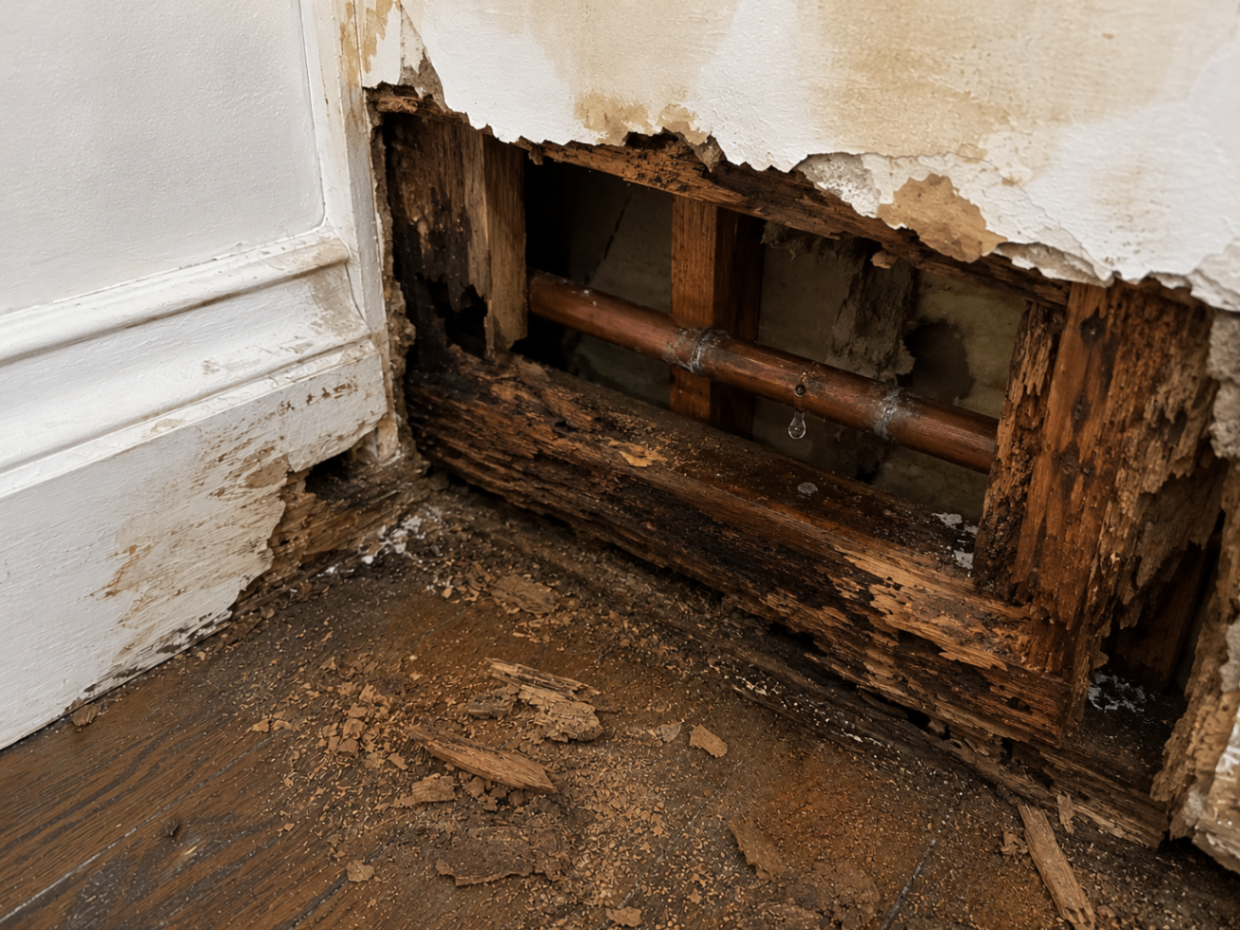
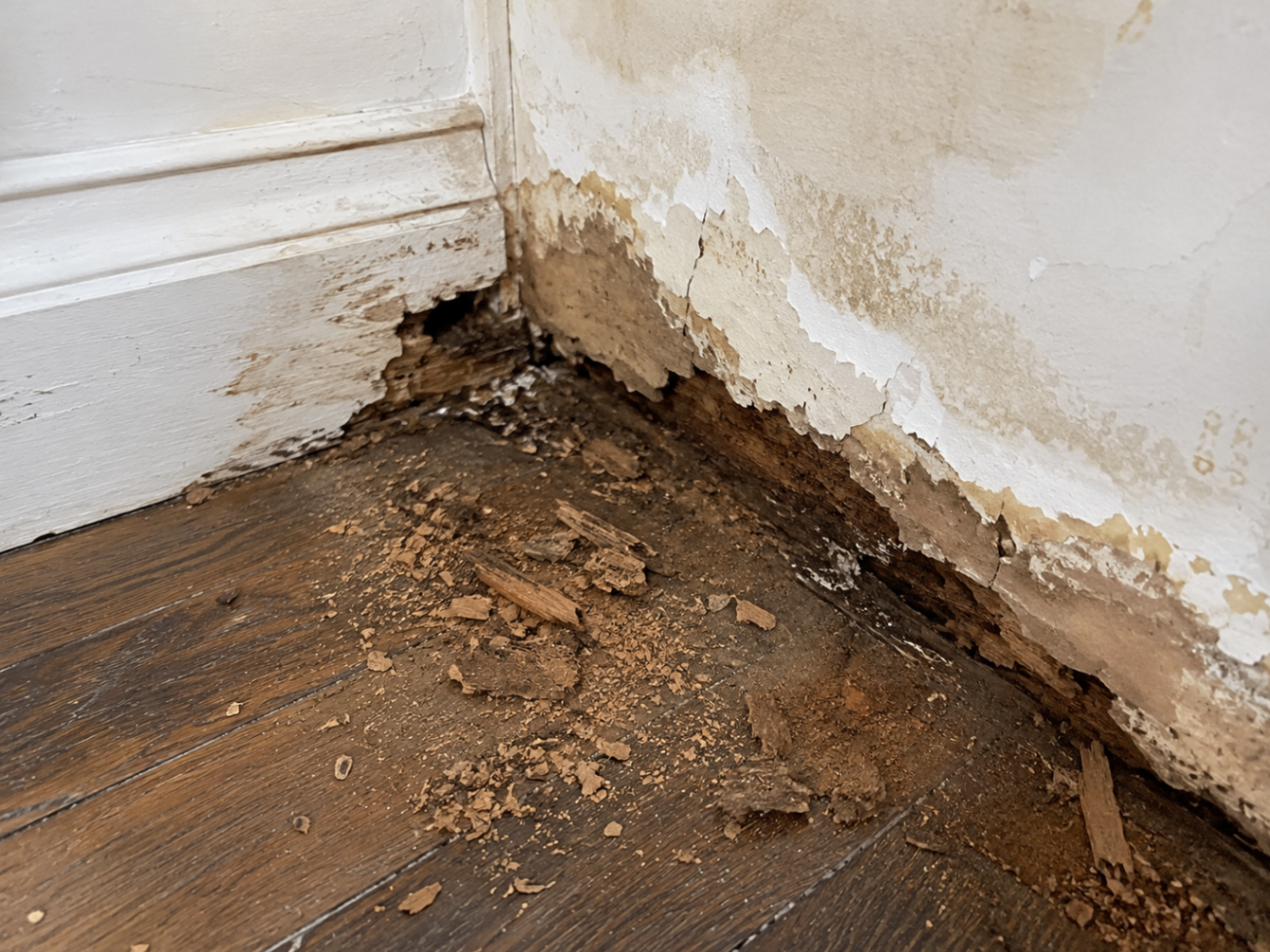
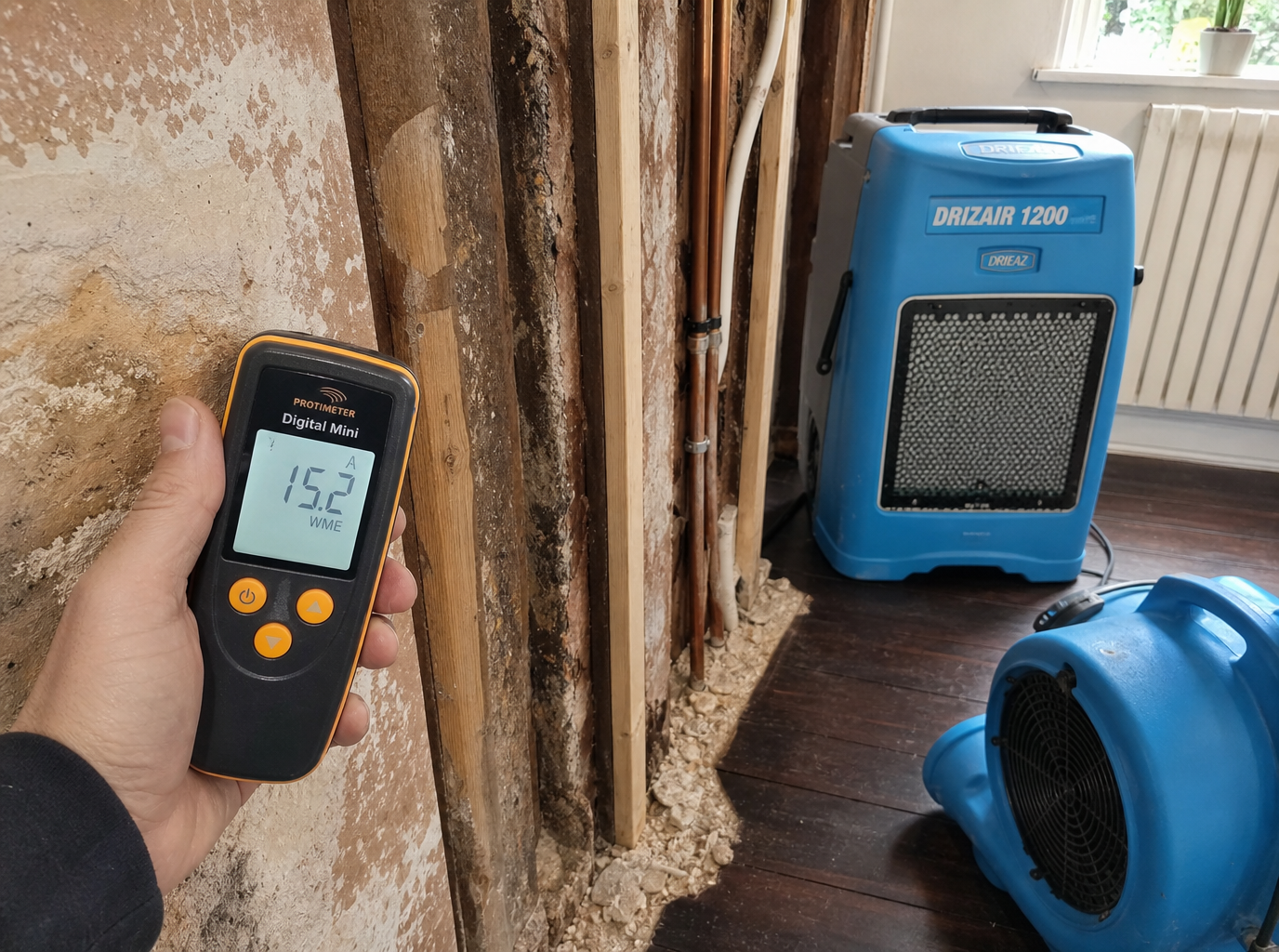
Initial visual inspection indicated that the damage was likely to extend beyond the finished surface. Once selective opening-up works were completed, the true extent of the loss became clear: prolonged moisture exposure had affected the lower wall structure, internal finishes and timber components within the cavity.
The opened section revealed decayed timber, damp debris and clear evidence that the pipe leak had been active for some time. Because the escape had remained concealed, moisture had accumulated gradually within the wall rather than presenting as a sudden visible flood.
- Concealed pinhole leak within stud wall pipework
- Severe moisture saturation inside the wall cavity
- Timber decay to the sole plate and lower studs
- Damaged plasterboard and lower wall finishes
- Hidden moisture trapped behind decorations
- Risk of further structural deterioration if left untreated
Opening the wall was essential to verify the condition of the timber structure, confirm the full extent of the moisture migration and create access for controlled drying.
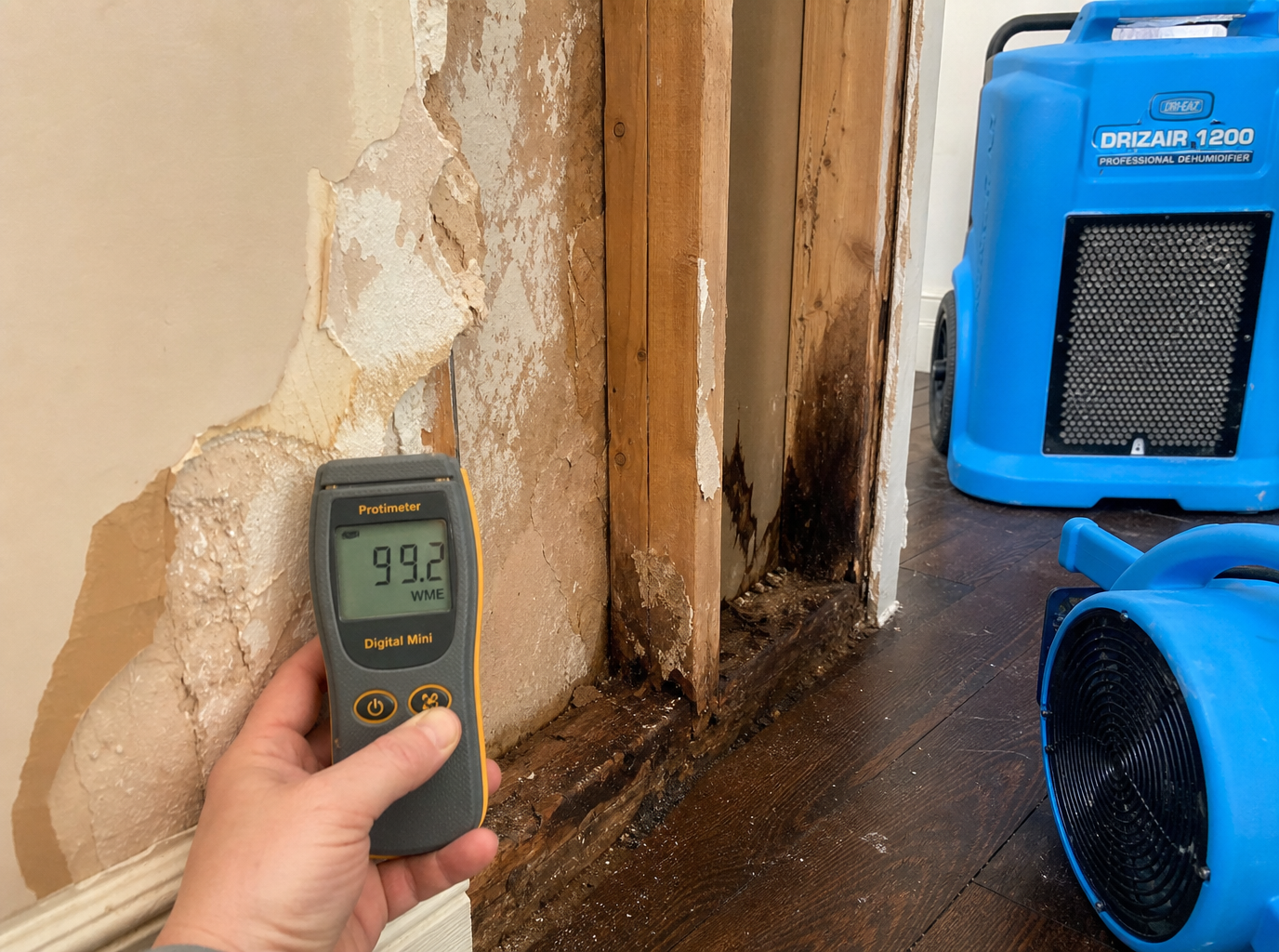
Readings taken with a calibrated Protimeter Digital Mini
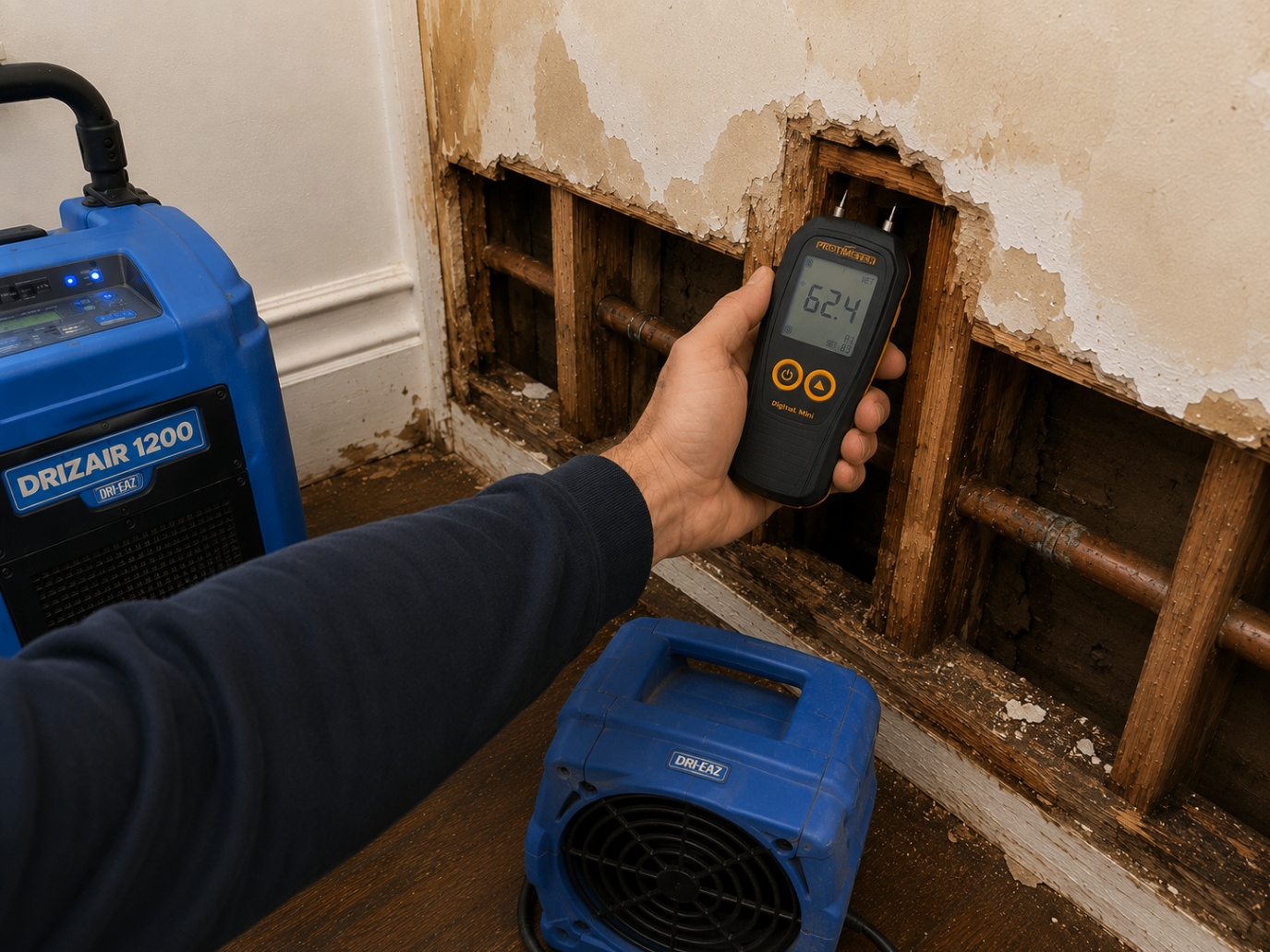
Moisture readings were taken from the same recorded locations within the wall cavity throughout the programme. This provided clear evidence of a steady downward trend as moisture was removed from the damaged timber and surrounding building materials.
 1
1Initial survey
Monitoring reading recorded
Severe saturation confirmed within the opened wall cavity and decayed timber structure.
 2
2Monitoring visit
Monitoring reading recorded
Drying programme successfully reducing free moisture within the wall construction.
 3
3Final verification
Monitoring reading recorded
Comparative reading recorded during monitoring. Precise figures held in the site record and available on request.
Illustrative service example
Comparative moisture readings were recorded at agreed monitoring points and reduced across the drying programme. Reinstatement proceeded after repeated readings supported the decision. Precise figures for this project are held in the site record and can be shared with the policyholder, insurer or loss adjuster on request.
Targeted cavity drying and moisture control
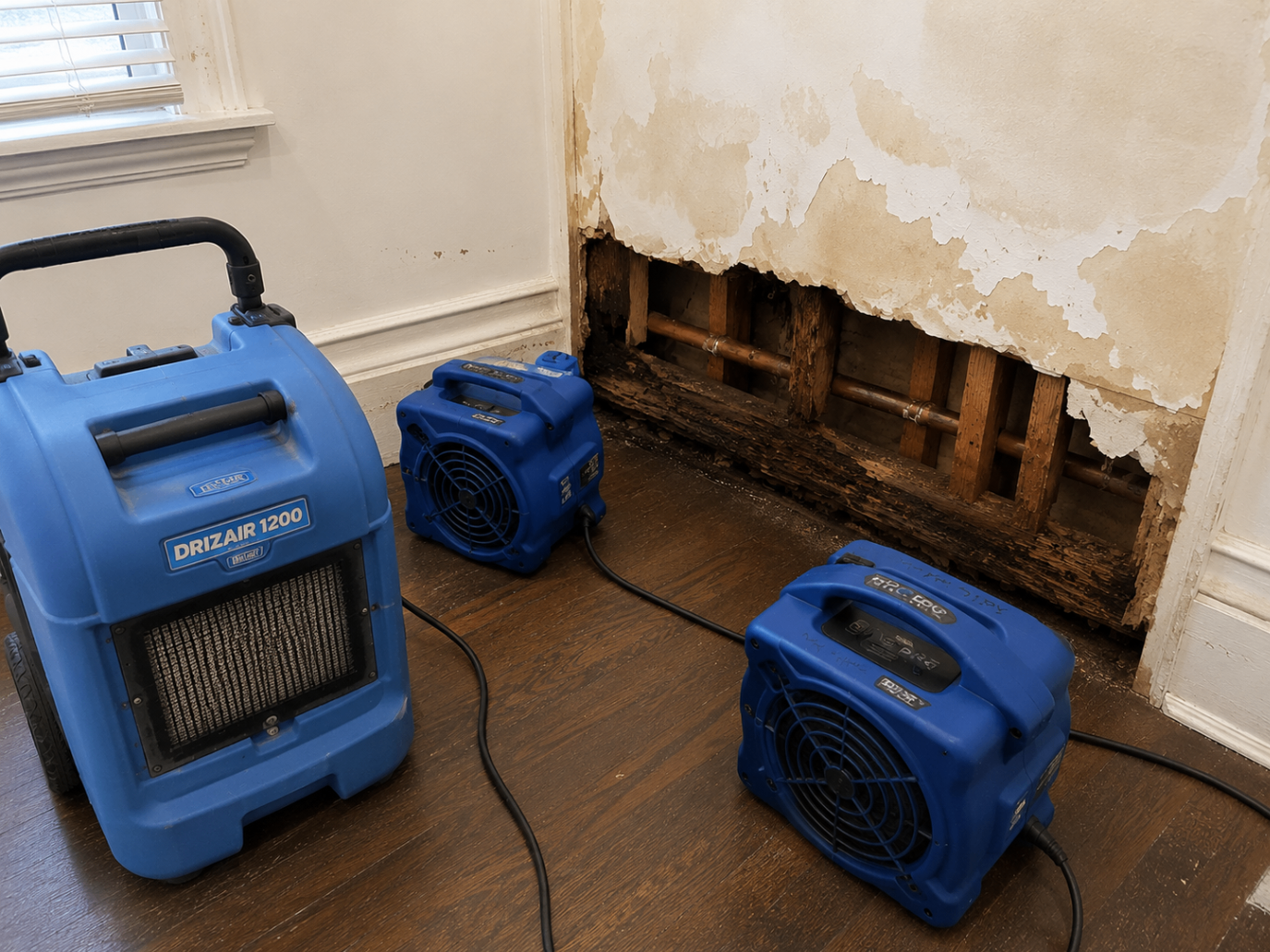
Once the damaged structure had been exposed and unsafe loose materials removed, My HomeDry installed a controlled drying programme designed specifically for the open wall cavity. Drying equipment was positioned to encourage airflow through the affected construction while continuously extracting moisture from the room air.
Equipment remained in operation throughout the drying phase, with repeat monitoring visits confirming consistent progress. Because this was a concealed, long-term leak rather than a one-off surface wetting event, verification of internal moisture reduction was critical before any repairs were closed up.
Continuous moisture extraction from the room and exposed wall cavity.
Directed airflow through the opened wall section to accelerate evaporation.
Wall lining held open to allow access, inspection and safe drying.
Repeat readings taken from recorded cavity positions.
Drying continued until readings confirmed the timber and adjoining wall materials had returned to an acceptable moisture content for reinstatement.
Timber repairs, plaster reinstatement and decoration
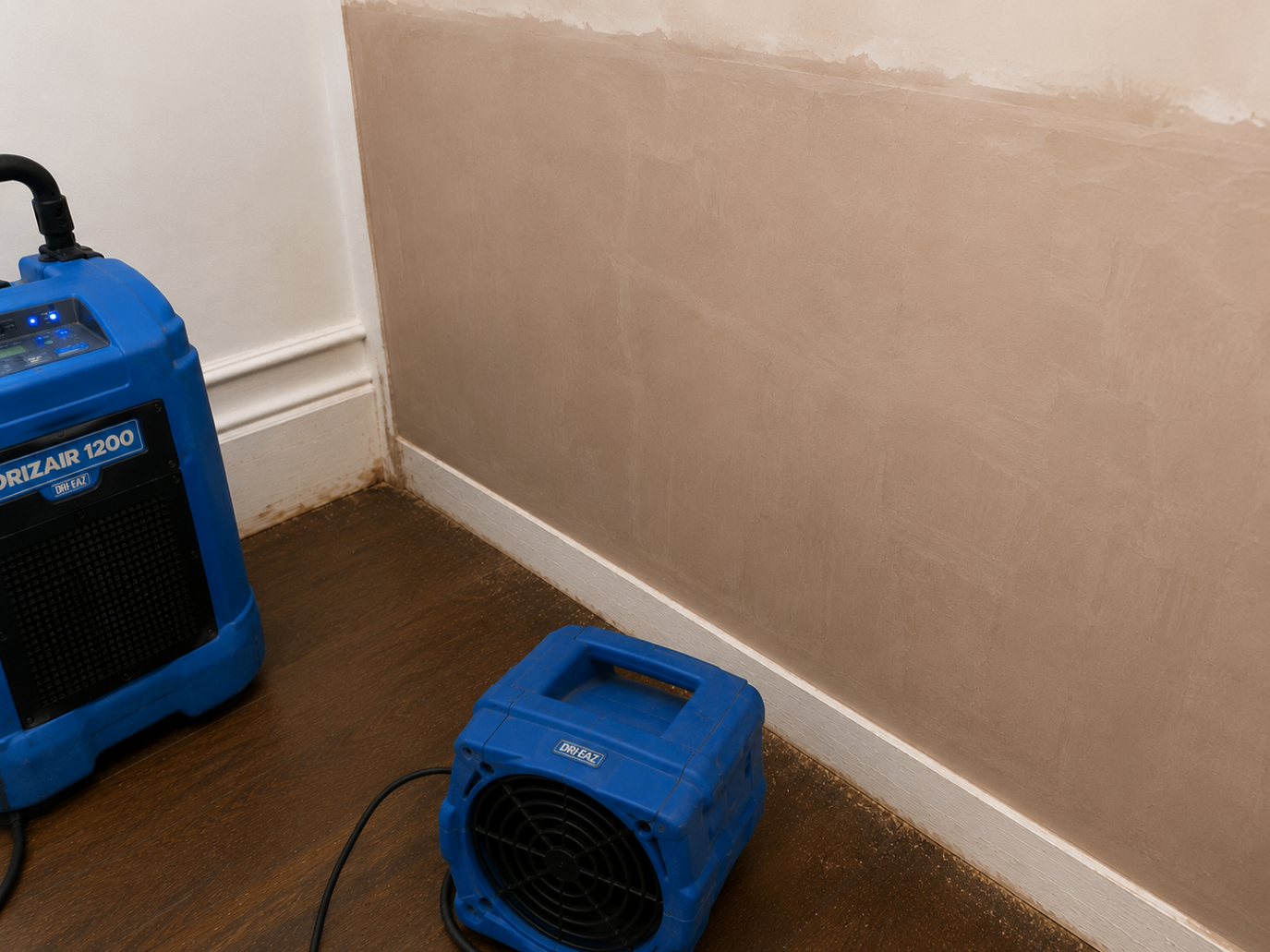
Once drying had been verified, the damaged wall structure was prepared for reinstatement. Compromised materials were removed, repair works were completed to the affected area and the wall was reboarded and plastered back to a sound decorative standard.
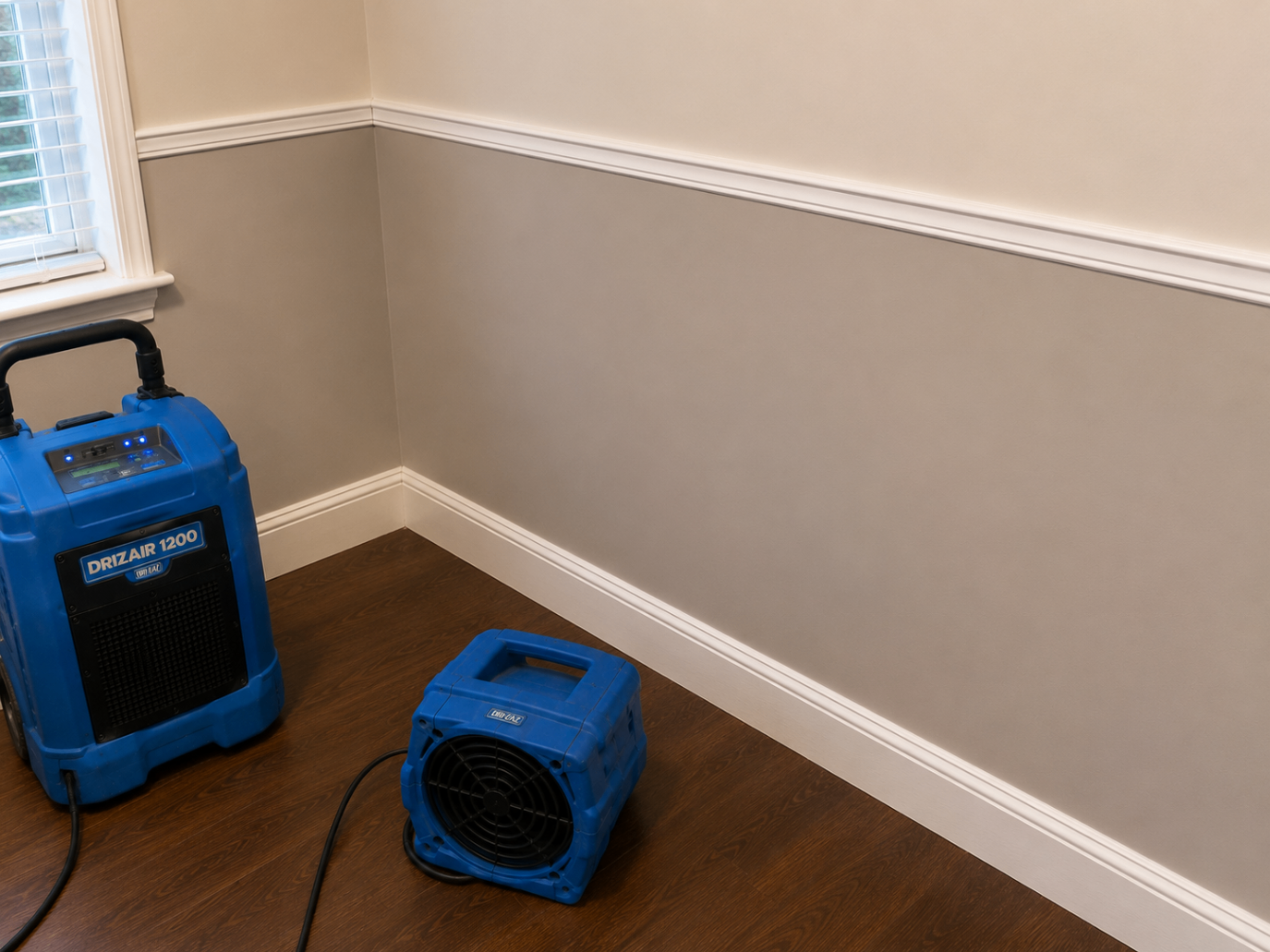
The final phase included surface preparation, finishing and redecoration so the room could be handed back clean, dry and visually consistent with the rest of the property.
- Removal of decayed and compromised materials
- Localised timber repair works
- Wall cavity preparation and drying verification
- Replacement boarding where required
- Plaster reinstatement
- Surface preparation and mist coating
- Full redecoration of the affected area
- Final quality inspection and handover
Because the drying stage was fully verified before reinstatement, the repaired wall could be closed and decorated with confidence.
A hidden leak resolved before further structural deterioration occurred
This case study shows how a concealed plumbing defect can cause significant internal damage before the issue becomes outwardly obvious. Long-term moisture trapped inside a timber stud wall can quietly affect structural timber, lower wall finishes and decorations even where no major surface flooding is present.
By identifying the hidden source, opening the structure, implementing controlled drying and verifying moisture reduction throughout, My HomeDry was able to restore the wall assembly safely and prepare the area properly for repair and redecoration.
The completed project left the property clean, dry and fully reinstated, with the concealed leak, damaged materials and hidden moisture all addressed as part of one managed restoration programme.
Have you discovered a leak?
Talk to a water damage specialist
From emergency response and structural drying to reinstatement and final decoration, My HomeDry manages the complete restoration process across the East and West Midlands.
Insurance coverage, claim approval and payment are determined by the insurer under the terms of the individual policy. My HomeDry cannot guarantee that any work or cost will be covered.
Case study published with the policyholder's written permission. Property address, personal details and insurer references have been withheld to protect the customer's privacy. Job reference, meter calibration certificates and full moisture logs are available on request to instructing insurers, loss adjusters and professional referrers.
Related services and areas
Services used
Areas covered