

Case study · External water extraction
Emergency Garden Flood Water Extraction — Sutton Coldfield
Site assessment · Emergency water extraction · Pumping · Controlled water discharge
My HomeDry attended a residential property in Sutton Coldfield following significant water accumulation within the front garden, establishing a controlled pumping operation to progressively remove standing water from the affected external area.
Illustrative service example. Photographs, moisture readings, timings and material details for this project are held in the original site record. Precise figures are not published on the public website; a redacted evidence pack can be shared with a policyholder, insurer or loss adjuster on request.
Executive summary
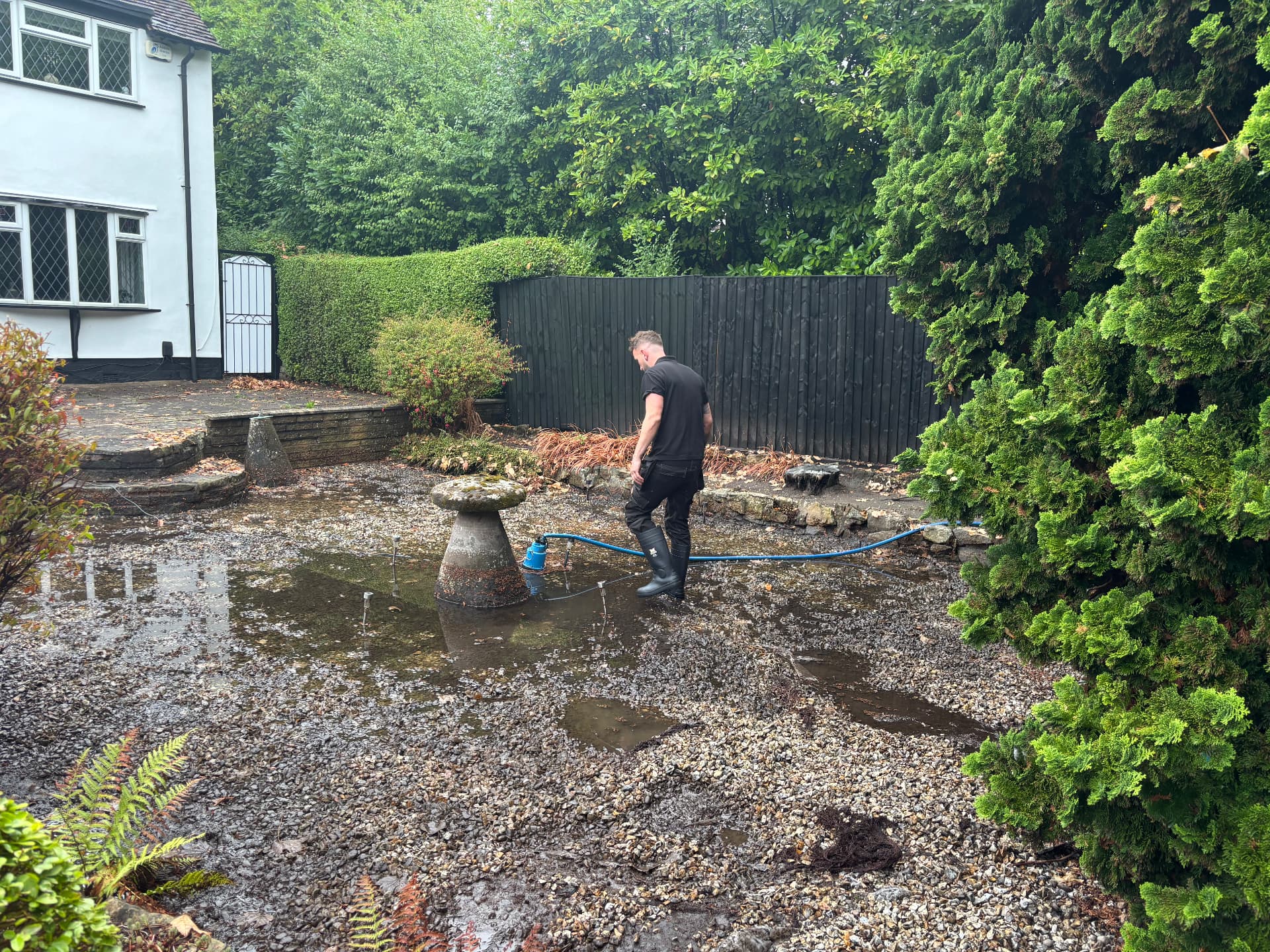
On arrival, a substantial proportion of the gravelled and landscaped area was found to be holding standing water. The affected ground was heavily saturated, with water collecting across multiple low-lying areas and extending towards the hardstanding immediately surrounding the property.
Due to the volume of water present and the proximity of the affected area to the building, active intervention was undertaken rather than relying solely on natural drainage. A controlled pumping operation was established to progressively remove the standing water and reduce the volume retained within the garden.
The appropriate response was determined by the conditions found on site: high-volume external water extraction and controlled discharge rather than a conventional dehumidifier and air-mover drying programme.
Extensive standing water across the front garden
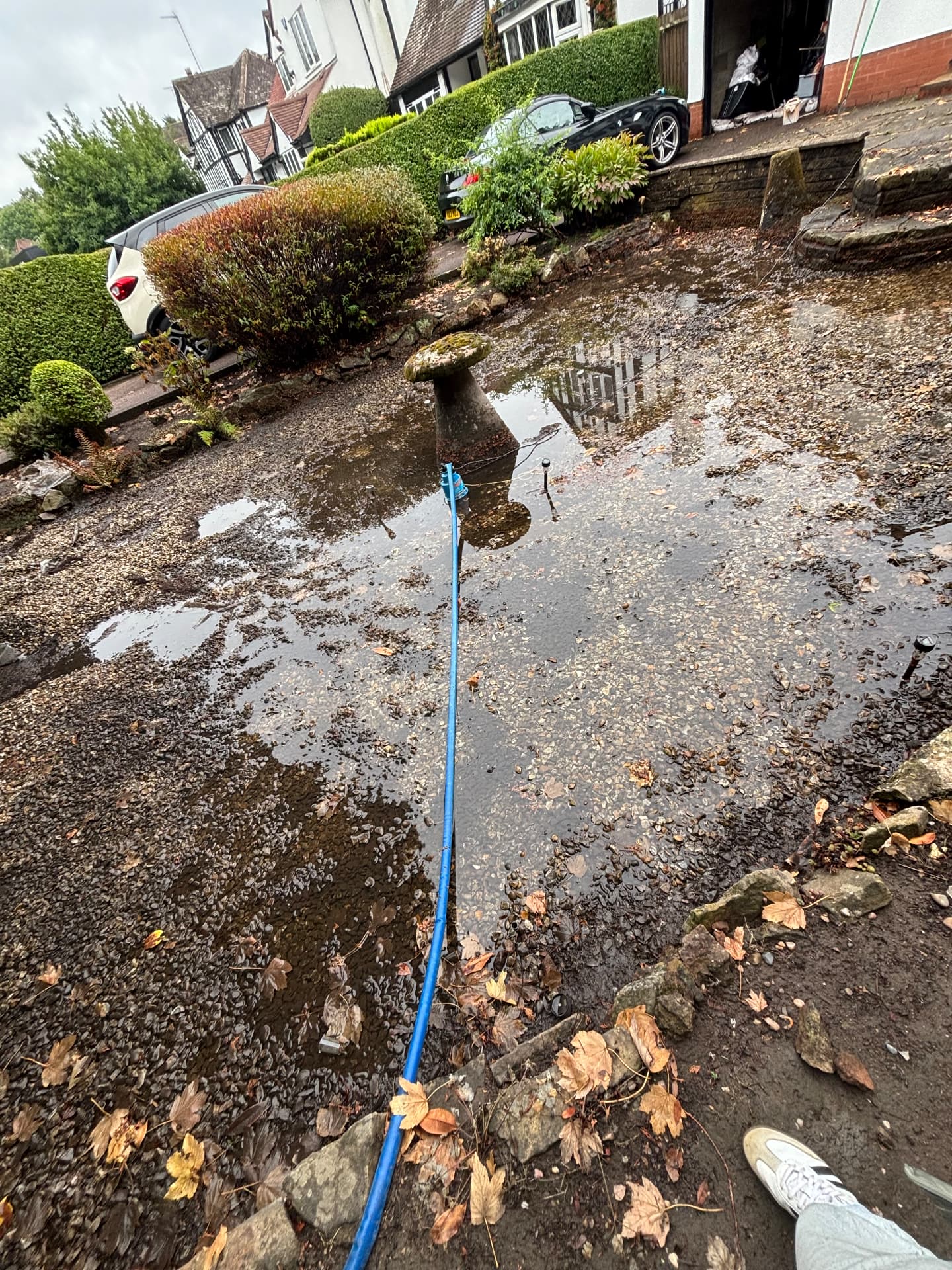
The initial inspection identified extensive standing water across the front garden. Water had accumulated throughout the gravelled surface, creating large interconnected areas of pooling, and the surrounding soil and landscaped sections were also visibly saturated.
Particular consideration was given to the property’s position in relation to the affected ground. Where significant volumes of water remain immediately adjacent to a building, prolonged saturation can increase the potential for water migration and place additional pressure on already saturated ground and drainage arrangements. The immediate priority was therefore to begin reducing the volume of standing water.
- Extensive standing water across the gravelled garden
- Heavily saturated underlying ground
- Water extending across a significant proportion of the external area
- Saturated planting and boundary areas
- Continued pooling within lower sections of the garden
- Property and hardstanding immediately adjacent to the affected area
- Significant quantity of water requiring mechanical extraction
Site observations recorded on attendance informed the decision to establish mechanical extraction rather than allow the ground to drain naturally.
Establishing the extraction system
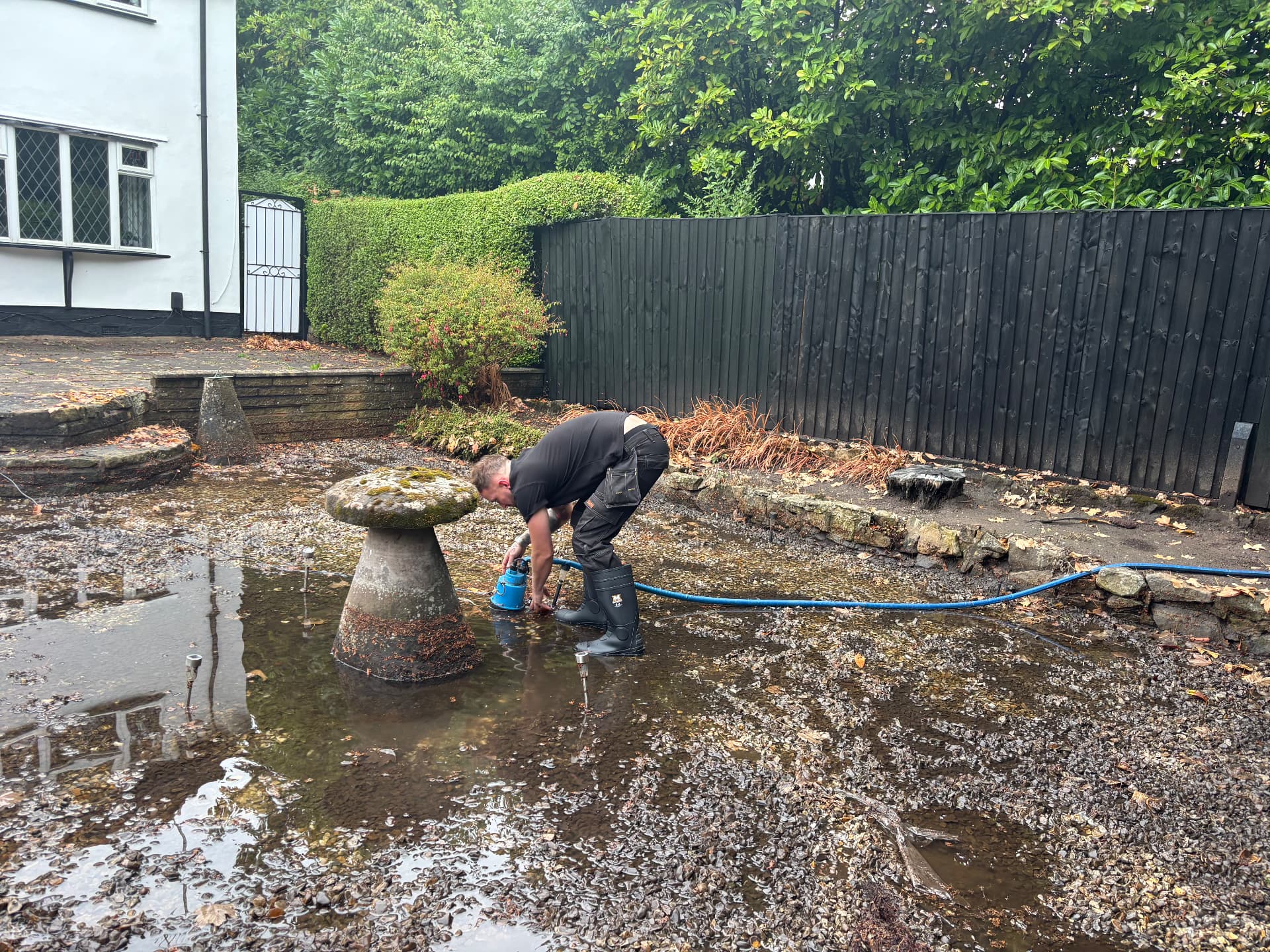
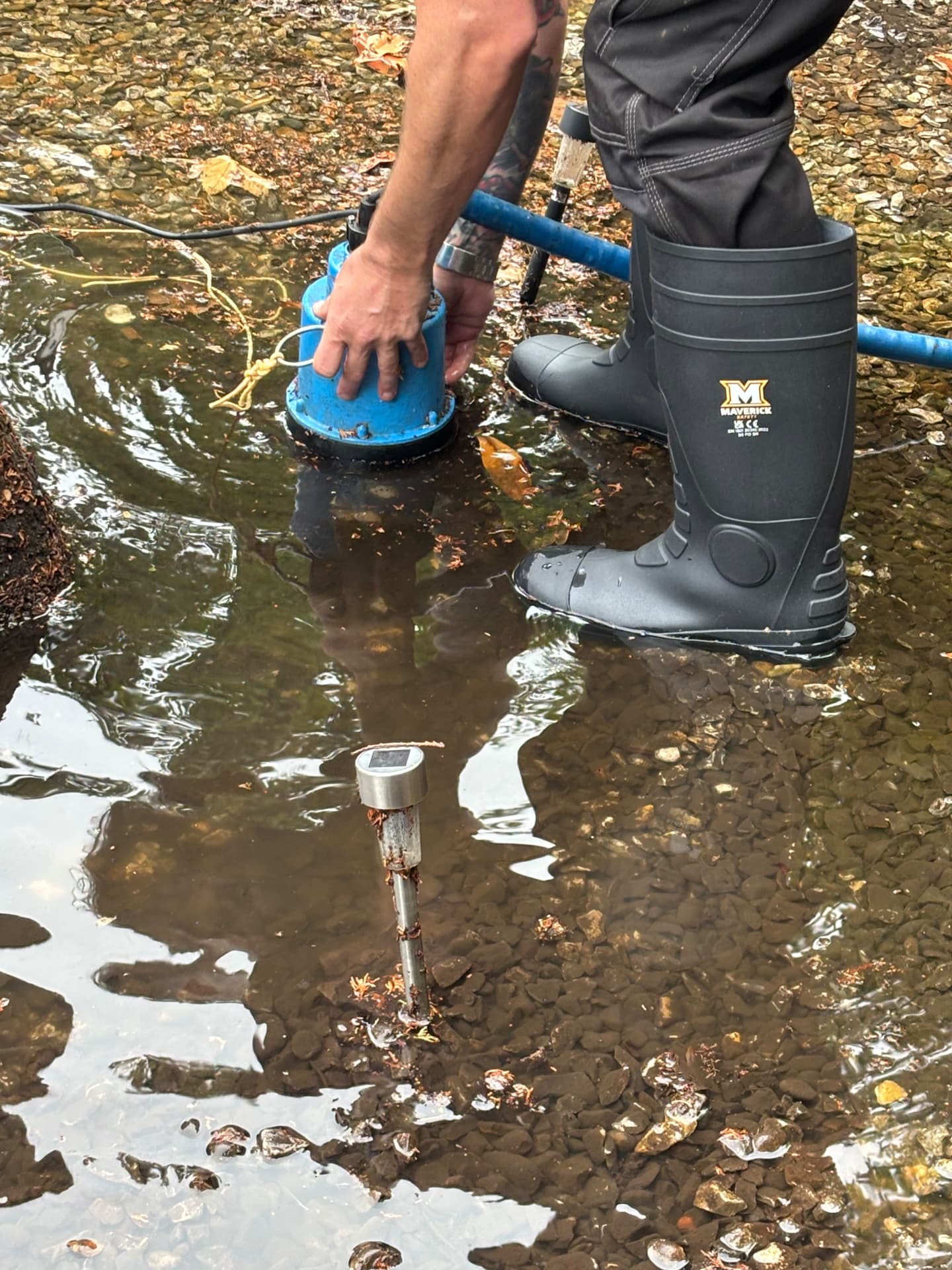
Following assessment of the garden, a suitable low point was selected for the extraction equipment. A submersible pump was positioned directly within the accumulated water to allow the system to draw from one of the deeper sections of the affected area.
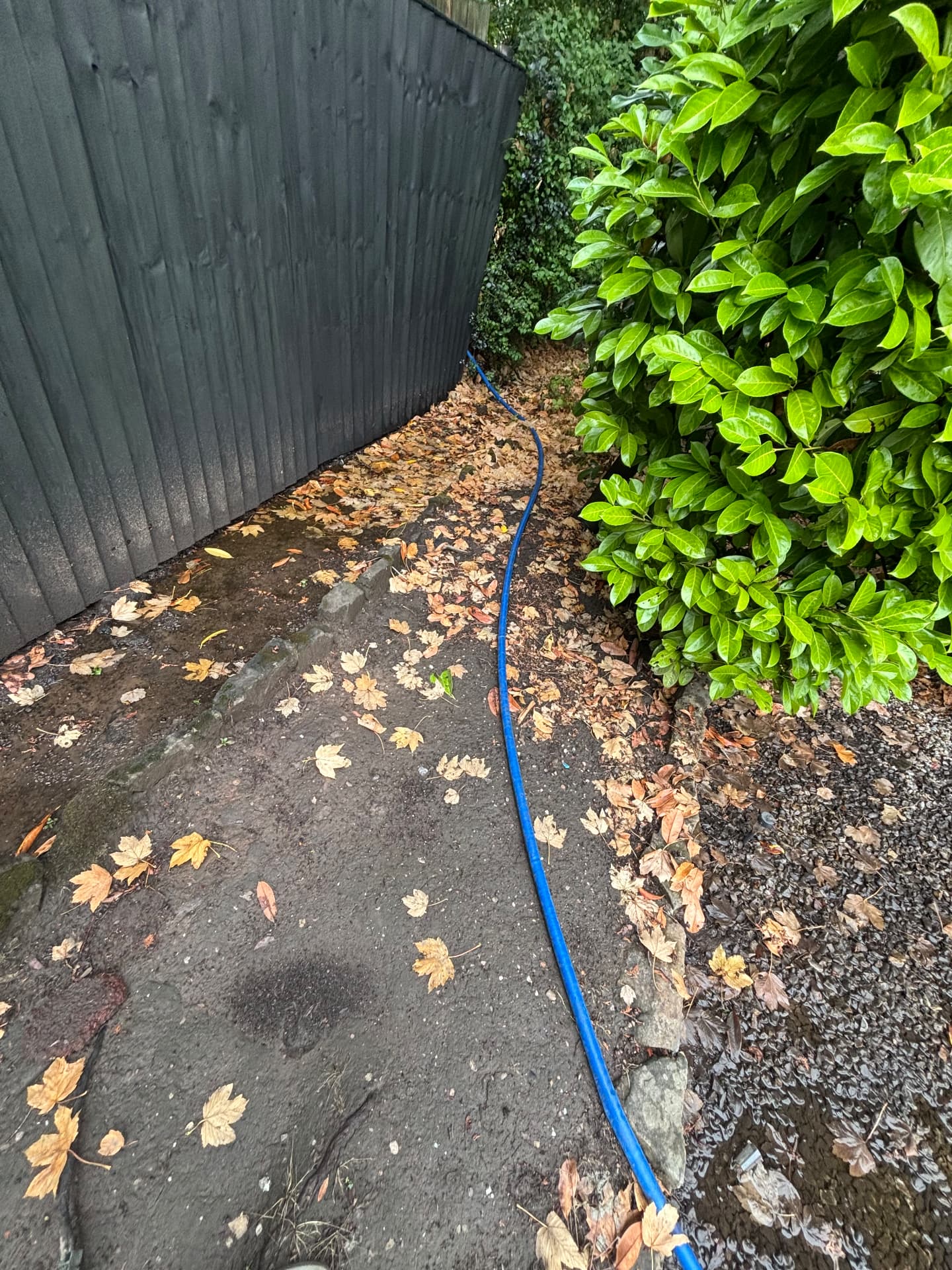
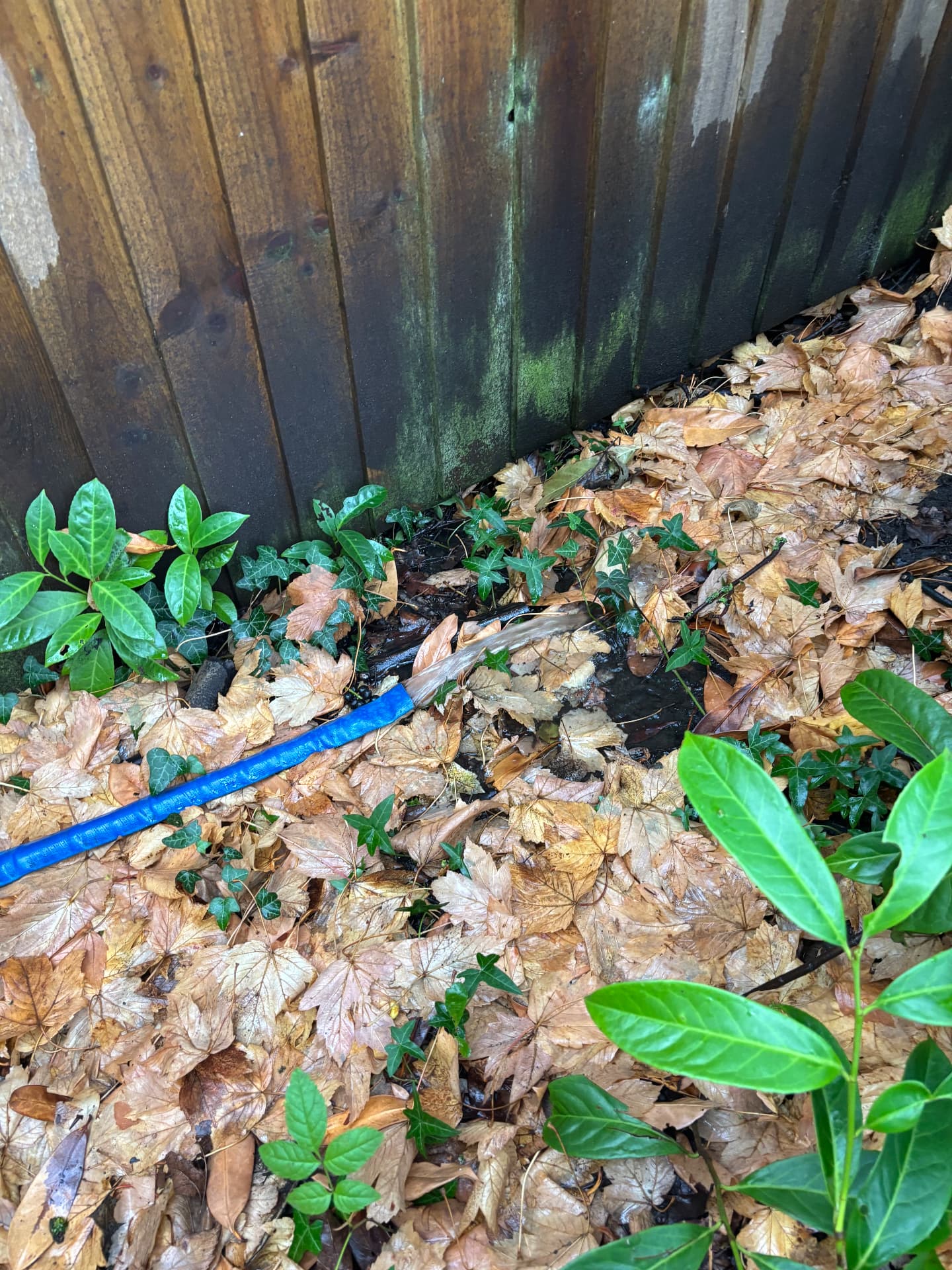
A high-capacity discharge hose was connected to the pump and routed away from the flooded section of the property. Care was taken when establishing the discharge route to ensure that extracted water was transported away from the immediate affected area rather than simply being transferred to another part of the saturated garden. Once the system had been established, pumping commenced.
As water was removed, the technician monitored the pump position and surrounding water level. This is important during external extraction because the effective position of a submersible pump changes as the depth of standing water falls, and monitoring allows the pump to continue drawing effectively while reducing the likelihood of the equipment running incorrectly as water levels diminish.
Positioned within a deeper section of the accumulated water.
Routed away from the flooded section of the property.
Selected away from the principal area of accumulation.
Pump position and water level checked throughout extraction.
Extraction progressively reduced the volume of free-standing water present across the affected area.
Managing a large external water loss
External water incidents can be very different from a conventional escape of water inside a property. Internally, the priority may quickly move from extraction to structural drying using dehumidification and air movement. In this case, the immediate problem was the physical volume of water being retained around the property, and before any meaningful assessment of residual saturation could be made, the free-standing water first needed to be removed.
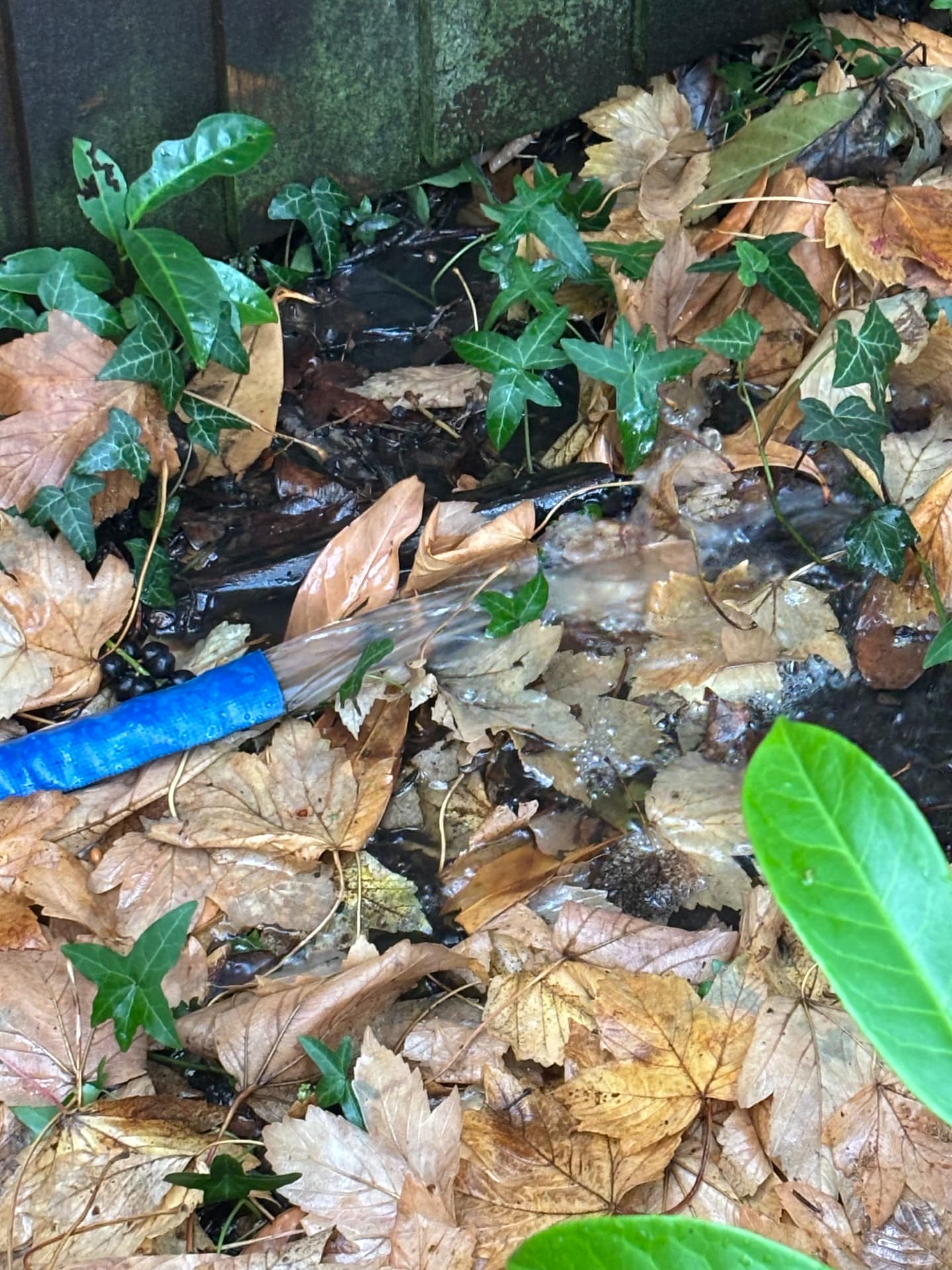
A long discharge hose transported extracted water away from the principal affected area, with the route extending from the submersible pump across the garden towards a suitable discharge location. The discharge point was monitored during operation, and the photographs showing water actively leaving the hose confirm that the extraction system was moving a substantial volume away from the affected garden.
The pumping operation successfully removed a significant volume of standing water from the front garden and substantially reduced the immediate accumulation surrounding the property. Removing the free water also allowed the external area to begin recovering naturally once the immediate source of saturation had been addressed.
- Rapid reduction in the volume of standing water
- Relief of prolonged saturation across the external area
- Extracted water prevented from returning to the same location
- Reduced period of submersion around the property
- Lower potential for a wider property-related water damage issue
- Attended monitoring of pump position and water levels
- Continuous, substantial discharge flow confirmed on site
- Natural ground recovery following removal of the accumulation
Further investigation would be recommended if abnormal water accumulation were to recur at the property.
Assessing each water-damage incident individually
Unlike many of My HomeDry’s internal escape-of-water projects, this incident did not require a conventional dehumidifier and air-mover drying programme. The conditions found on site called for high-volume external water extraction and controlled discharge instead.
The technician remained involved throughout the extraction process rather than positioning the pump and leaving it unattended, allowing progressively shallower areas of standing water to drain towards the extraction point as the overall water level reduced.
This case demonstrates the importance of assessing each water-damage incident individually rather than applying the same drying process to every situation.
Have you discovered a leak?
Talk to a water damage specialist
From emergency response and structural drying to reinstatement and final decoration, My HomeDry manages the complete restoration process across the East and West Midlands.
Insurance coverage, claim approval and payment are determined by the insurer under the terms of the individual policy. My HomeDry cannot guarantee that any work or cost will be covered.
Case study published with the policyholder's written permission. Property address, personal details and insurer references have been withheld to protect the customer's privacy. Job reference, meter calibration certificates and full moisture logs are available on request to instructing insurers, loss adjusters and professional referrers.
Related services and areas
Services used
Areas covered