
Flood Damage Drying
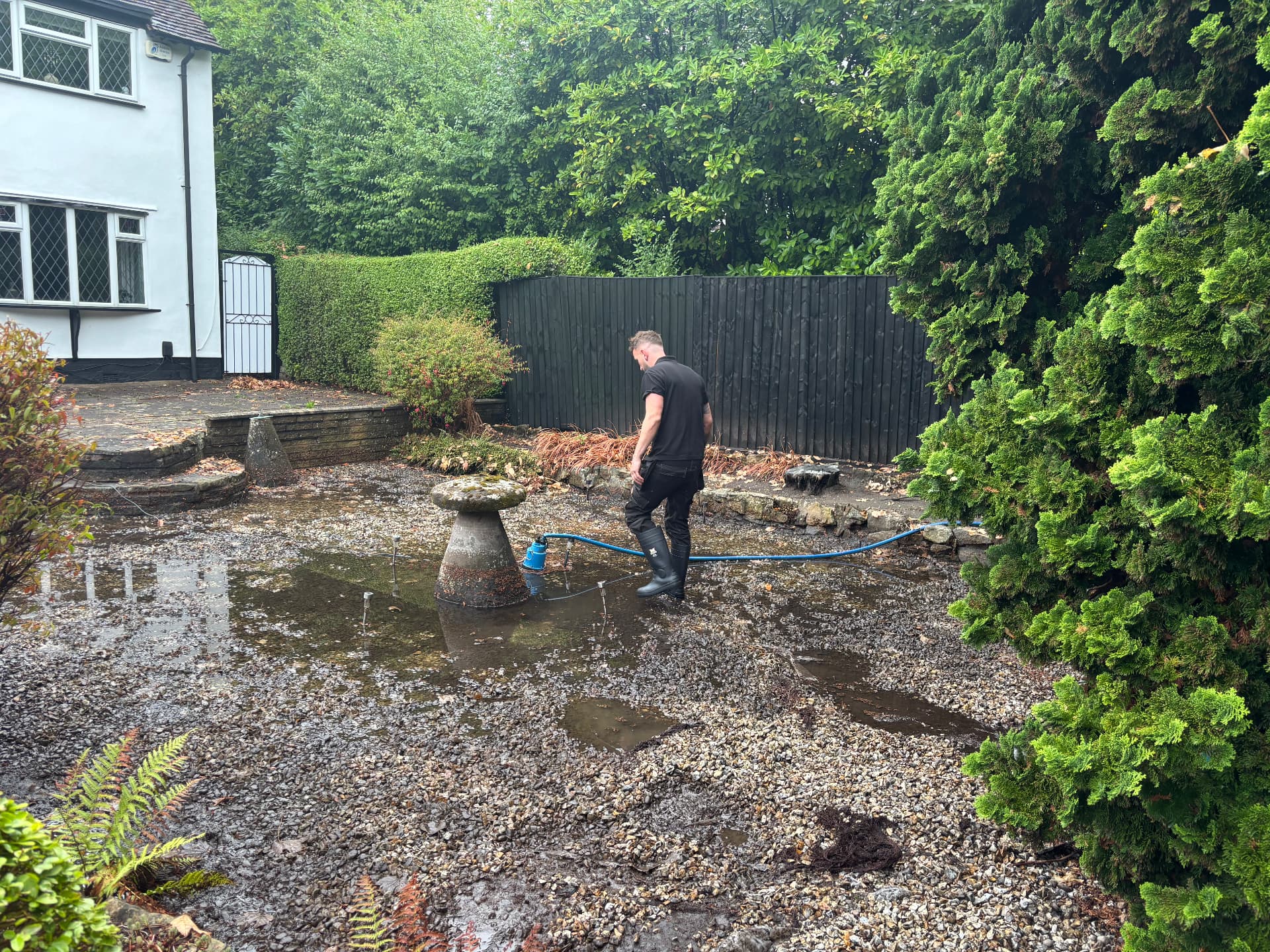
Flood damage can involve a large water load, several rooms and a mixture of construction materials. The source may be internal, such as a tank failure, or external, such as surface water entering the building.
The first stage is to assess safety, contamination, standing water, access and the materials affected. External or contaminated floodwater must not be treated as ordinary clean-water damage, and capability must be confirmed before attendance.
Contamination changes the plan
Water source, sewage risk, sediment and time in the property affect PPE, retention and cleaning decisions. Specialist hygiene or remediation support may be required.
Large-area extraction and zoning
The property may be divided into zones so extraction, removal, drying and monitoring can progress safely and in a controlled order.
Recurring ingress and defects
Drying cannot succeed while external water, drainage failure or building defects continue to admit water. The source must be controlled and may require separate contractors.
Discuss this situation with My HomeDry
Call with the property postcode, source of water and areas affected.
Frequently asked questions
Helpful guides
Proof of work
Related case studies
Completed projects involving this type of water damage.
Where My HomeDry works
My HomeDry is based in Sutton Coldfield and provides specialist water damage restoration and structural drying primarily across the West Midlands. Commercial, managed-property and insurance-related instructions are also considered more widely across the Midlands. Attendance depends on the property location, incident requirements and current operational capacity.
Significant flooding in a property?
Call with the water source, postcode, areas affected and any known contamination risk.