

Case study · Escape of water
Washing Machine Hose Failure — Utility Room & Kitchen Restoration
Emergency water extraction · Structural drying · Full property restoration
Homeowners returned to find their ground floor flooded after a washing machine inlet hose catastrophically failed while the property was unoccupied. My HomeDry attended, extracted standing water and completed a controlled structural drying programme.
Illustrative service example. Photographs, moisture readings, timings and material details for this project are held in the original site record. Precise figures are not published on the public website; a redacted evidence pack can be shared with a policyholder, insurer or loss adjuster on request.
Executive summary
My HomeDry received an emergency call after the homeowners returned home to discover significant flooding throughout their ground floor. A flexible inlet hose connected to the washing machine had catastrophically failed whilst the property was unoccupied, and because the water supply remained live, clean mains water escaped continuously for several hours before being discovered.
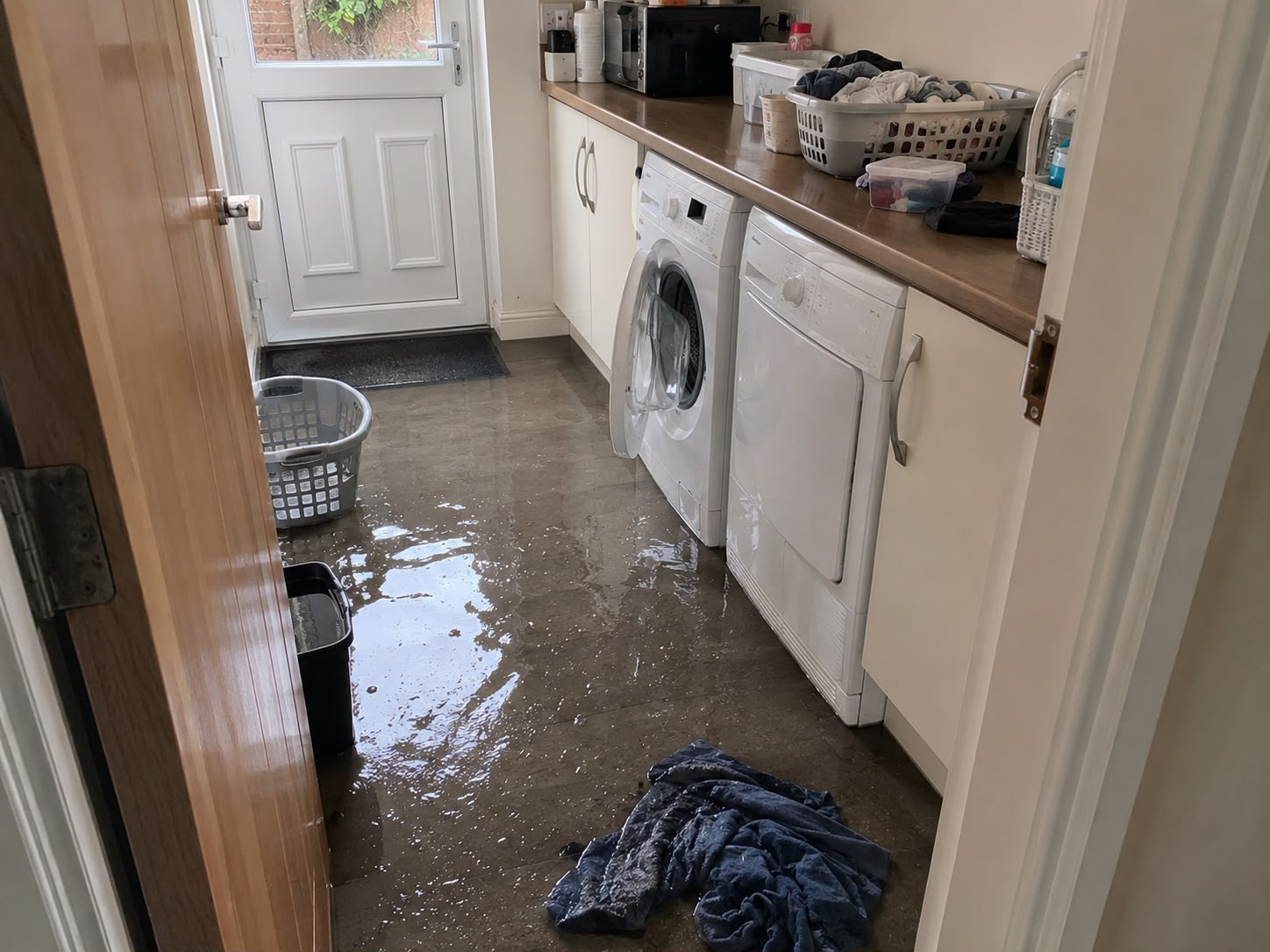
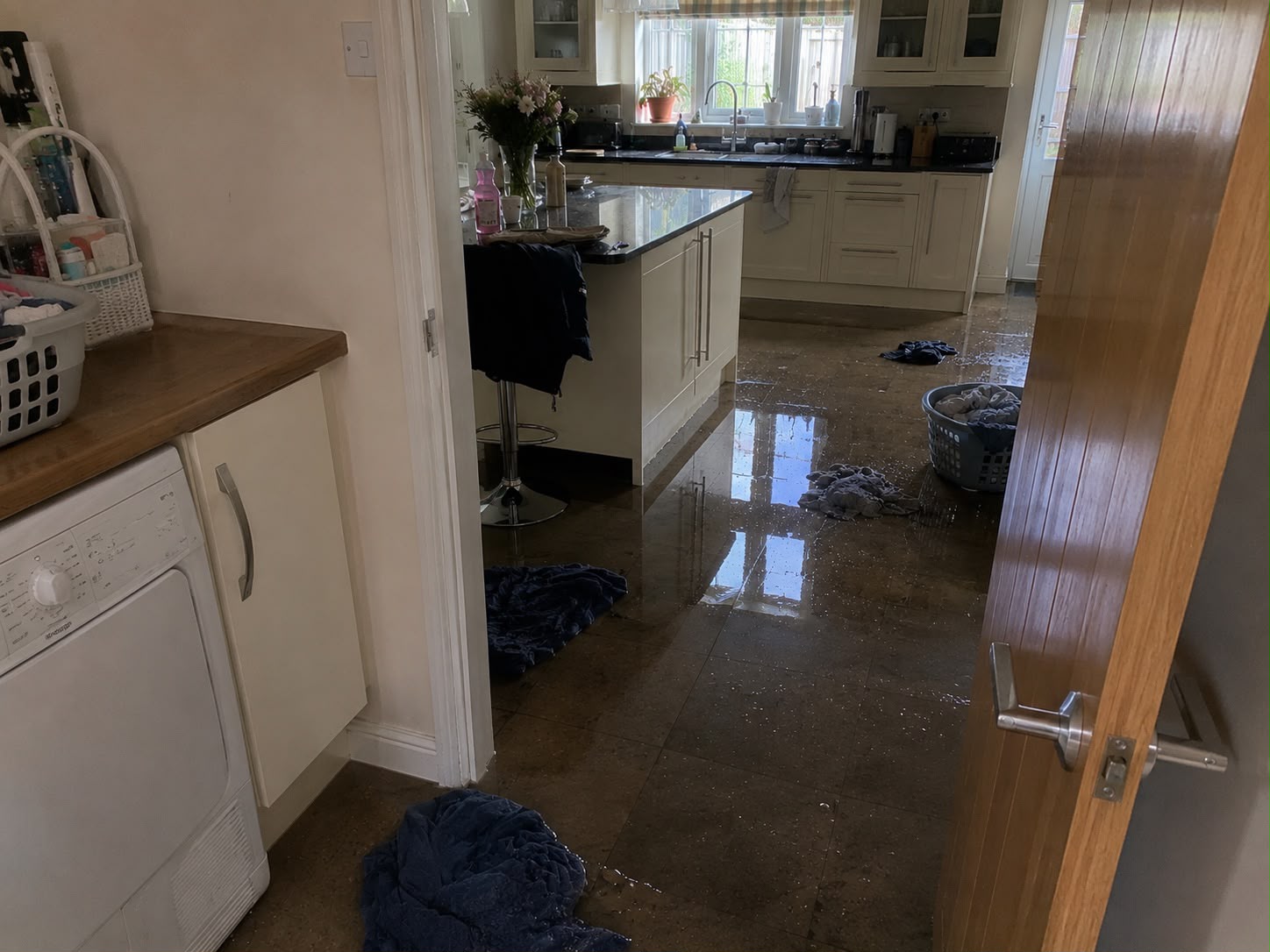
Water initially flooded the utility room before overflowing through the doorway into the adjoining kitchen. Although the flooding was relatively shallow, prolonged exposure allowed water to migrate beneath kitchen units, into timber skirting boards, MDF plinths and decorative joinery. The homeowner isolated the incoming water supply before our technicians arrived on site.
Prompt attendance enabled standing water to be extracted before a controlled structural drying programme was installed and monitored through to documented completion.
Comparative moisture readings: a monitoring reading at initial survey, monitoring readings that reduced steadily before final documentation .
Standing water and hidden migration beneath cabinetry
Upon arrival, a full visual inspection and moisture survey were completed. The utility room floor remained covered by standing water with visible migration extending into the adjoining kitchen.
Although the water was classified as clean water, prolonged saturation presented a significant risk of secondary damage if immediate mitigation was not undertaken. Water had tracked beneath kitchen cabinetry and been absorbed into timber door linings, skirting boards and MDF plinths.
- Standing clean water throughout the utility room
- Water migration across the tiled kitchen floor
- Moisture tracking beneath kitchen cabinetry
- Saturated kitchen plinths
- Elevated moisture within timber door linings
- Moisture present within skirting boards
- No evidence of contamination
- No structural movement
The priority was to remove standing water before moisture could penetrate further into the building fabric. Electrical risks were isolated before extraction commenced.
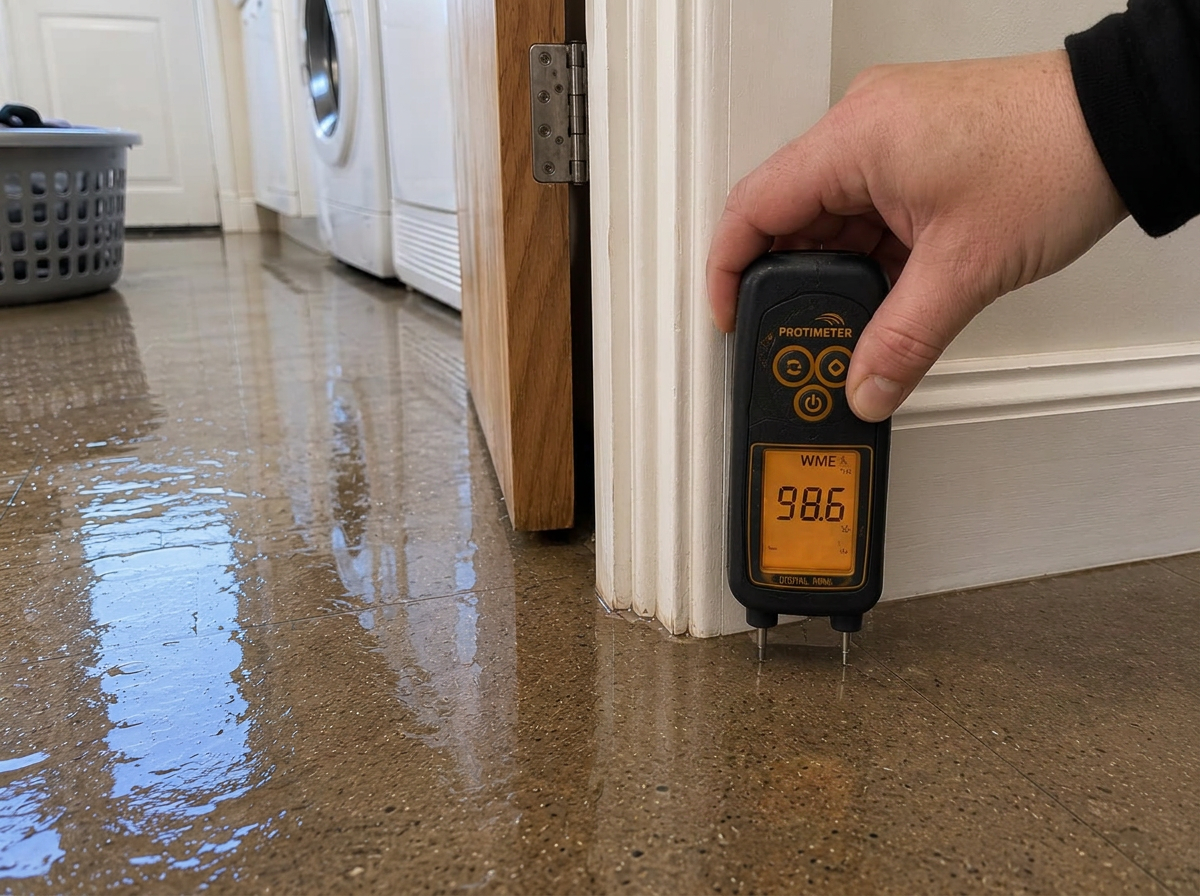
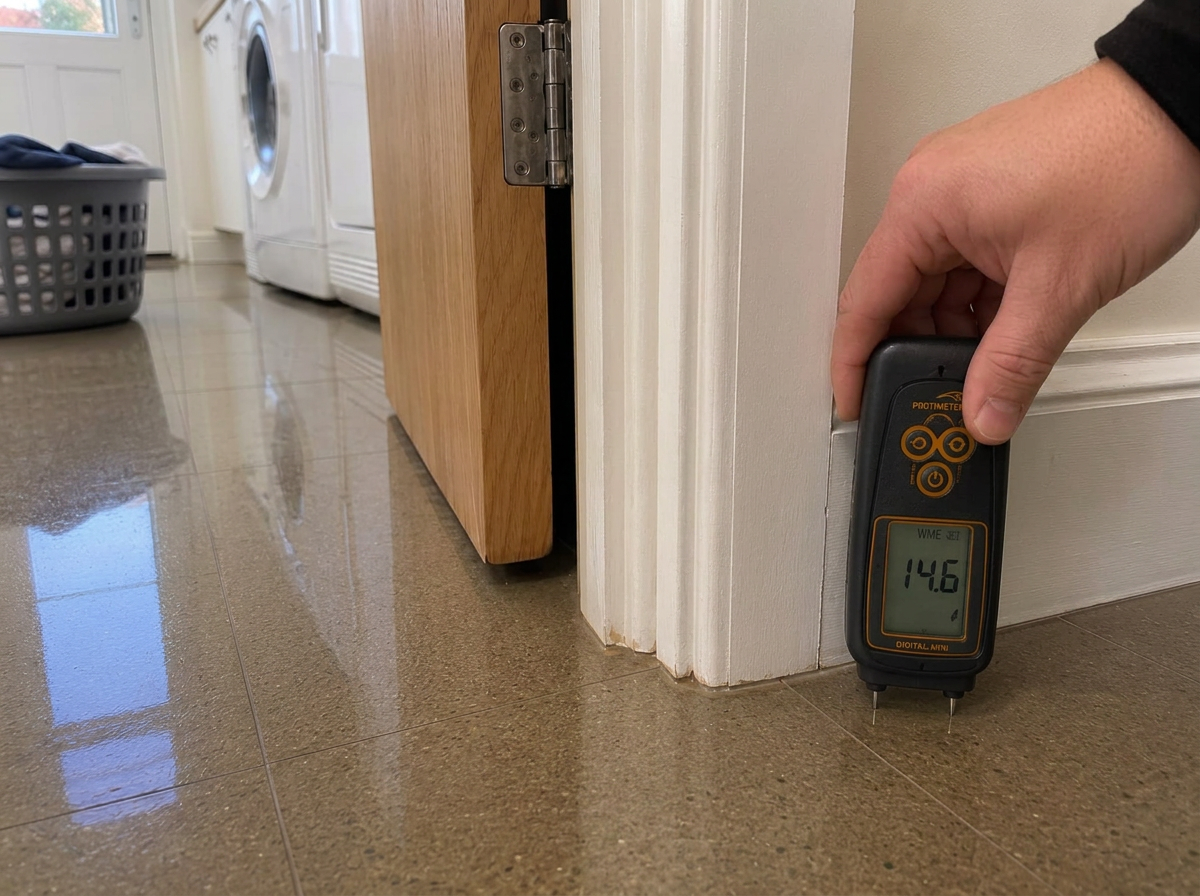
Readings taken with a calibrated Protimeter Digital Mini
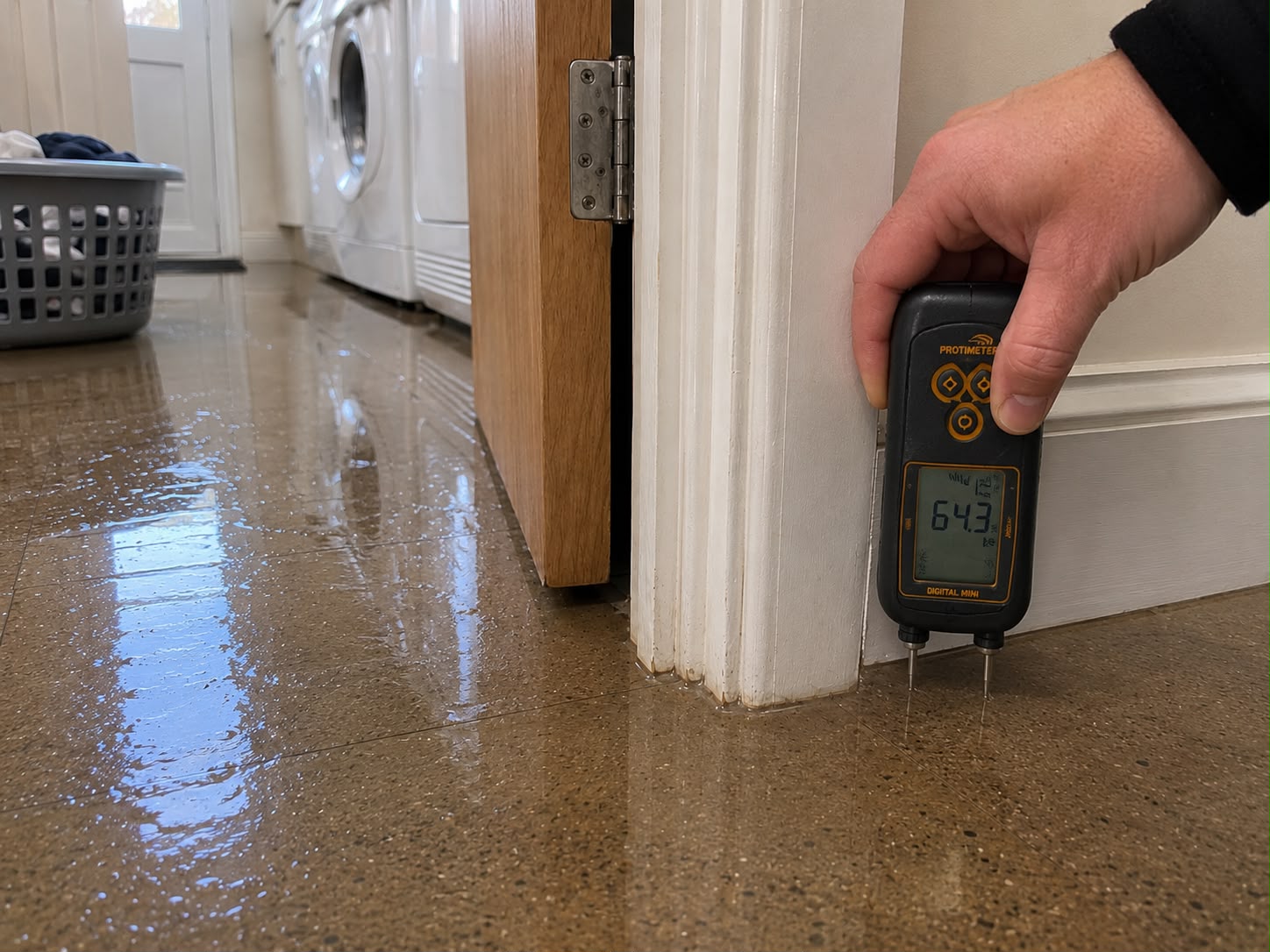
Moisture mapping was undertaken using a Protimeter Digital Mini, concentrating on materials most susceptible to moisture absorption including timber skirting boards, the utility room door lining, kitchen plinths and adjacent timber trims. Monitoring locations were recorded and photographed to ensure repeat readings were taken from identical positions throughout the drying programme.
 1
1Initial survey
Monitoring reading recorded
Severe moisture absorption confirmed across the utility room door lining and adjoining timber finishes following prolonged flooding.
 2
2Monitoring visit
Monitoring reading recorded
Substantial reduction confirmed — drying programme progressing successfully.
 3
3Final verification
Monitoring reading recorded
Comparative reading recorded during monitoring. Precise figures held in the site record and available on request.
Illustrative service example
Comparative moisture readings were recorded at agreed monitoring points and reduced across the drying programme. Reinstatement proceeded after repeated readings supported the decision. Precise figures for this project are held in the site record and can be shared with the policyholder, insurer or loss adjuster on request.
Emergency extraction and a targeted drying programme
Emergency works commenced immediately. Pump extraction and commercial wet vacuum extraction were used to remove standing water, followed by inspection beneath kitchen appliances and protection of unaffected areas. Rapid extraction substantially reduced the volume of free water remaining within the property.
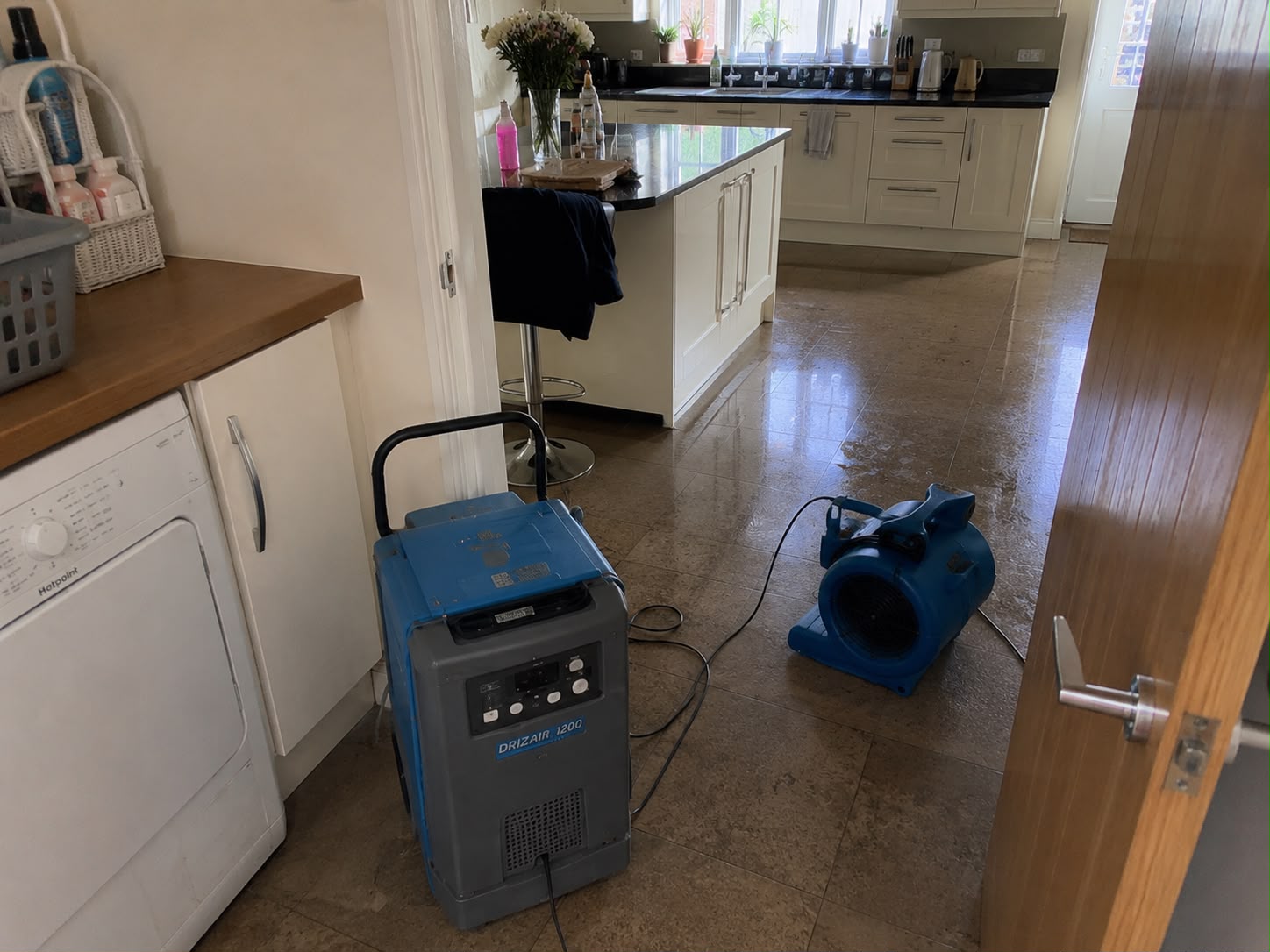
A controlled structural drying programme was then installed to remove residual moisture trapped within the timber joinery and beneath the kitchen units while maintaining stable environmental conditions. The dehumidifier was positioned within the utility room to maximise moisture removal from the most heavily affected area, and the air mover was directed through the doorway into the kitchen, encouraging airflow beneath kitchen units and across the tiled floor.
Kitchen appliances were carefully pulled forward to improve air circulation behind the cabinetry. Equipment remained operational continuously throughout the drying programme, with daily equipment checks confirming both units were operating efficiently.
Commercial moisture extraction concentrated in the utility room.
Directed airflow across the tiled floor and beneath kitchen units.
Rapid removal of standing water to limit secondary damage.
Repeat moisture readings from recorded monitoring positions.
Electrical risks were isolated before extraction commenced, and appliances were repositioned safely to allow airflow behind the cabinetry throughout the programme.
Cleaning, minor repairs and handover
Following successful moisture verification, reinstatement commenced. The prompt emergency response and rapid extraction of standing water had significantly reduced permanent damage, so replacement of major building materials was unnecessary.
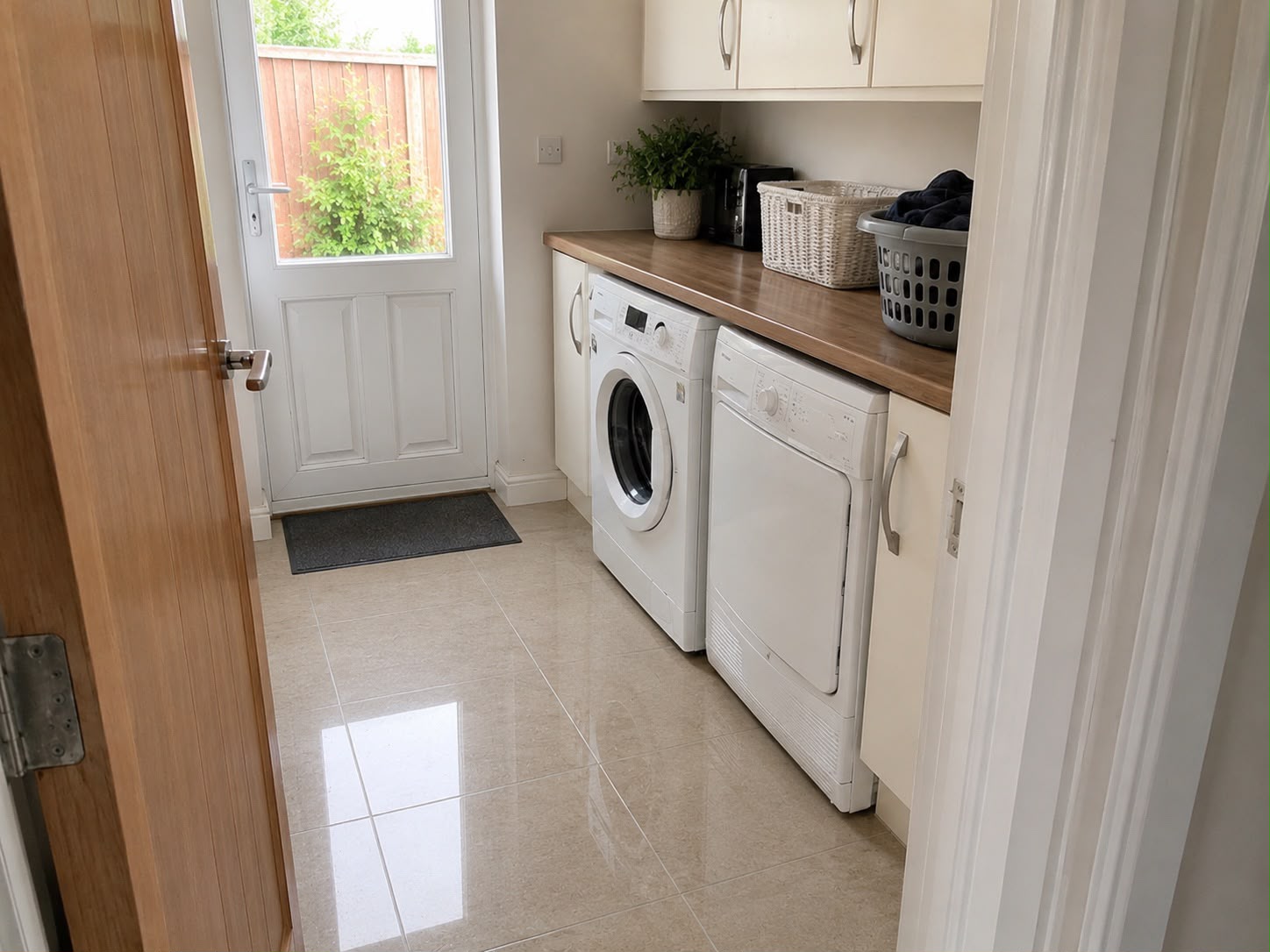
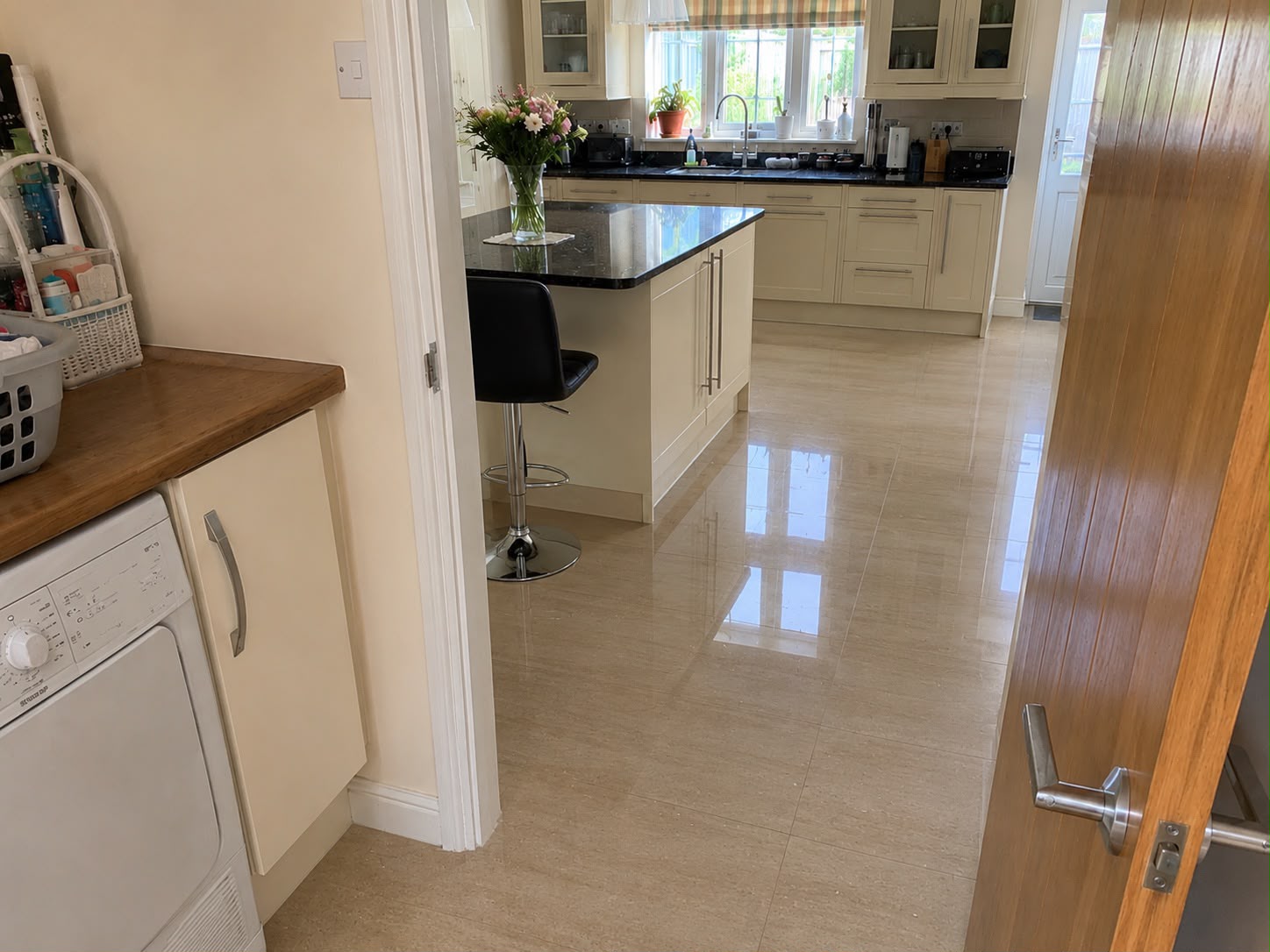
Both rooms were thoroughly cleaned, kitchen plinths were inspected, removed fixtures were reinstated and a final quality inspection was carried out. The utility room and kitchen were returned to the homeowner clean, dry and fully restored to their pre-loss condition.
- Thorough cleaning of all tiled flooring
- Cleaning beneath appliances
- Minor decorative repairs
- Inspection of kitchen plinths
- Reinstatement of removed fixtures
- Appliances safely repositioned
- Final quality inspection
- Property handed back to the homeowner
Because drying had been commenced quickly, replacement of major building materials was unnecessary — a clear benefit of prompt attendance following an escape of water.
prompt response prevented major replacement works
This project demonstrates how a relatively simple appliance failure can rapidly develop into a significant escape of water incident when a property is left unoccupied. Although the source was a failed washing machine inlet hose, prolonged exposure allowed water to migrate from the utility room into the adjoining kitchen and be absorbed by timber joinery, kitchen plinths and decorative finishes.
Rapid attendance by My HomeDry enabled standing water to be extracted before implementing a carefully controlled structural drying programme using commercial dehumidification and targeted air movement. Moisture monitoring showed a steady reduction from an initial monitoring reading to a monitoring reading during the monitoring visit, before achieving a final verification reading of a monitoring reading — confirming that the affected materials had returned to acceptable moisture levels.
Thanks to early intervention and continuous monitoring, major replacement works were avoided. Following final cleaning and inspection, the utility room and kitchen were restored to their pre-loss condition and safely handed back to the homeowners, demonstrating My HomeDry's end-to-end capability from emergency response through to successful completion.
Have you discovered a leak?
Talk to a water damage specialist
From emergency response and structural drying to reinstatement and final decoration, My HomeDry manages the complete restoration process across the East and West Midlands.
Insurance coverage, claim approval and payment are determined by the insurer under the terms of the individual policy. My HomeDry cannot guarantee that any work or cost will be covered.
Case study published with the policyholder's written permission. Property address, personal details and insurer references have been withheld to protect the customer's privacy. Job reference, meter calibration certificates and full moisture logs are available on request to instructing insurers, loss adjusters and professional referrers.
Related services and areas
Areas covered