

The short answer
Do not simply dry the surface and re-lay the floor covering. Water under a floor sits in a poorly ventilated void where it can soak insulation, joists, chipboard and screed, and it will keep releasing moisture back into the room for weeks. The floor construction needs identifying, the extent of the moisture measuring, and drying carried out into the void rather than across the top of it.
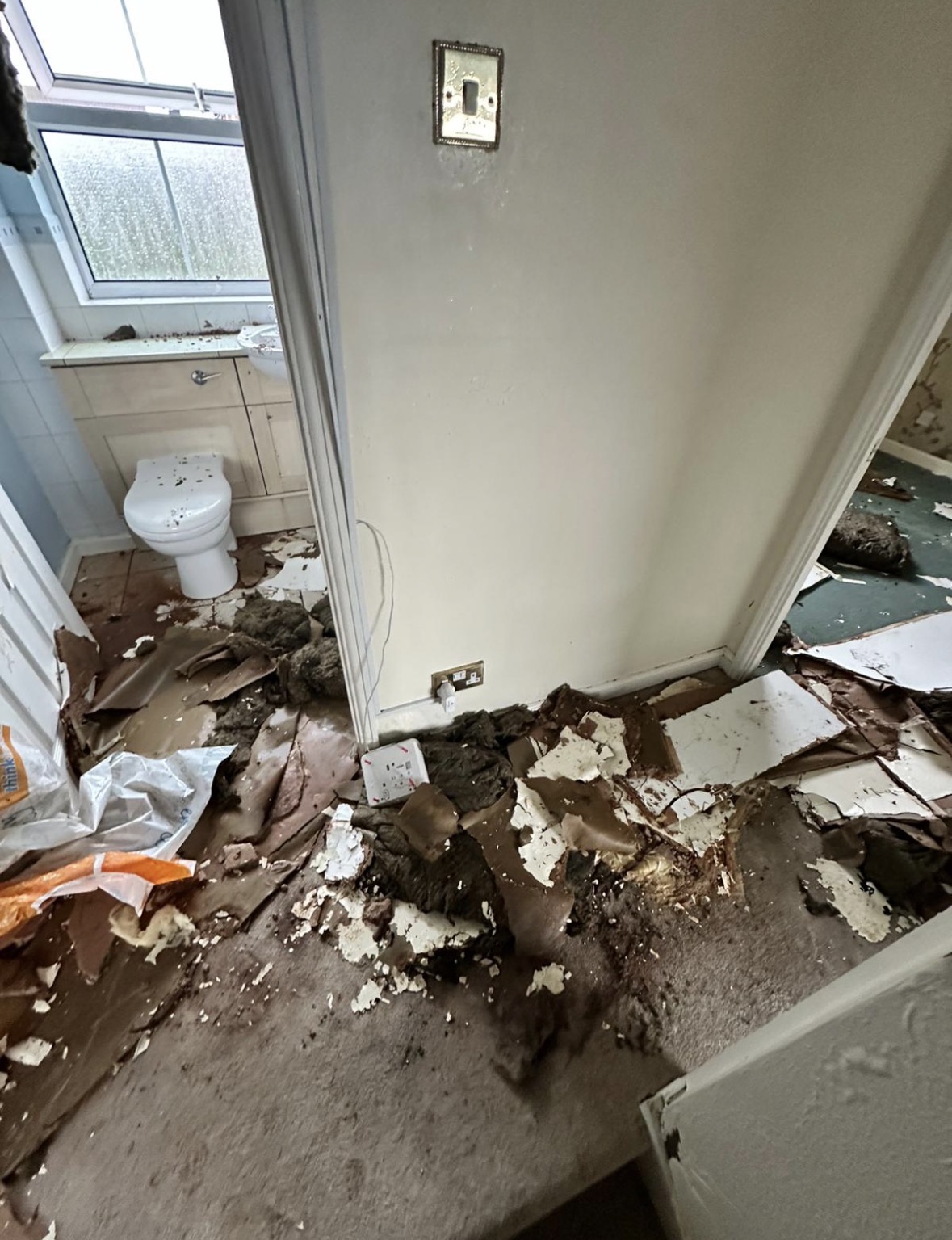
Why hidden moisture behaves differently
A wet carpet in a ventilated room has air moving over it constantly. A wet joist in a sealed floor void has almost none. Moisture that reaches a void has nowhere convenient to go, so it evaporates slowly, condenses on cooler surfaces and works its way back up into the room over a long period.
That is why properties sometimes seem fine for a fortnight and then develop a musty smell, lifting flooring or staining at the base of walls.
Suspended timber floors
A suspended floor has floorboards or sheet material fixed over joists with a void beneath. Water passes through joints easily and then sits on whatever is below — often insulation, sometimes the oversite or a concrete base.
- Floorboards can cup, swell or lift as they take on and release moisture
- Chipboard sheet flooring swells and loses strength once it is soaked, and often does not recover
- Joists dry slowly and can stay wet long after the boards feel fine
- Mineral wool insulation holds water and slumps, losing both its insulating value and any chance of drying quickly
Screed, concrete and solid floors
Solid floors do not have a void, but they absorb water into the screed and slab and hold it. Sand-cement screed in particular releases moisture slowly, and a floor that reads acceptably at the surface can still be wet deeper down.
Where there is insulation within or beneath a floor build-up, or where underfloor heating pipework runs through it, the picture is more complex again and needs establishing before any new floor covering goes down.
Smells, mould and secondary damage
A musty or earthy smell coming through a floor is usually the first clear sign that a void is still damp. Damp organic material in an unventilated space is the ideal environment for mould growth, and mould under a floor is out of sight until it becomes a genuine nuisance.
Prolonged dampness in structural timber is also worth taking seriously. Timber that stays wet is at risk of decay, and repairs at that stage are far more disruptive than drying would have been.
How the extent is established
An assessment starts by identifying the floor construction, because that determines everything that follows. Moisture readings are then taken across the affected area and compared with unaffected parts of the same floor. Where appropriate, thermal imaging helps highlight temperature differences that may indicate where moisture has spread — it suggests where to look, rather than proving moisture on its own.
In some cases a small, controlled inspection opening is the only way to see what condition the void and insulation are actually in.
How subfloor drying is carried out
Drying a void means getting dry air into it and moist air out, rather than treating the room above. Depending on the construction that can involve lifting sections of board, removing saturated insulation that will not dry in place, extracting standing water, and introducing controlled airflow into the void with dehumidification managing the moisture released.
Progress is monitored with repeat readings, because the void is the part of the property that will lag behind everything else.
What not to do
- Do not re-lay carpet, laminate or vinyl over a floor that has not been confirmed dry.
- Do not leave saturated insulation in place hoping it will dry — often it will not.
- Do not seal the floor up to hide the smell; the moisture is still there.
- Do not lift electrical-carrying floorboards without knowing what runs beneath them.
Common questions
How My HomeDry can help
Related guides
- What actually happens during structural drying?The full process explained step by step — inspection, assessment, extraction, equipment, monitoring and completion.
- Mould after a water leak — why does it happen?Why mould follows delayed or incomplete drying, why cleaning the surface rarely settles it, and what actually resolves it.
- How long does a house take to dry after a leak?Why there is no single answer, what actually changes the timescale, and why 'it feels dry' is not the same as dry.
This guide provides general property water-damage information from My HomeDry. Individual circumstances differ, and it is not financial, legal or insurance advice. Where an insurance claim is involved, decisions on liability, policy coverage and settlement rest with the insurer under the terms of the individual policy.