

The short answer
Keep everyone out from underneath, turn off the electricity to that area at the consumer unit if it is safe to reach, place containers to catch the water, then find and stop the source — usually the bathroom, a tank, or pipework in the floor above. Do not stand under a bulging ceiling. Once it has stopped, photograph everything, and arrange for the ceiling void and insulation to be assessed, because that is where the water stays.
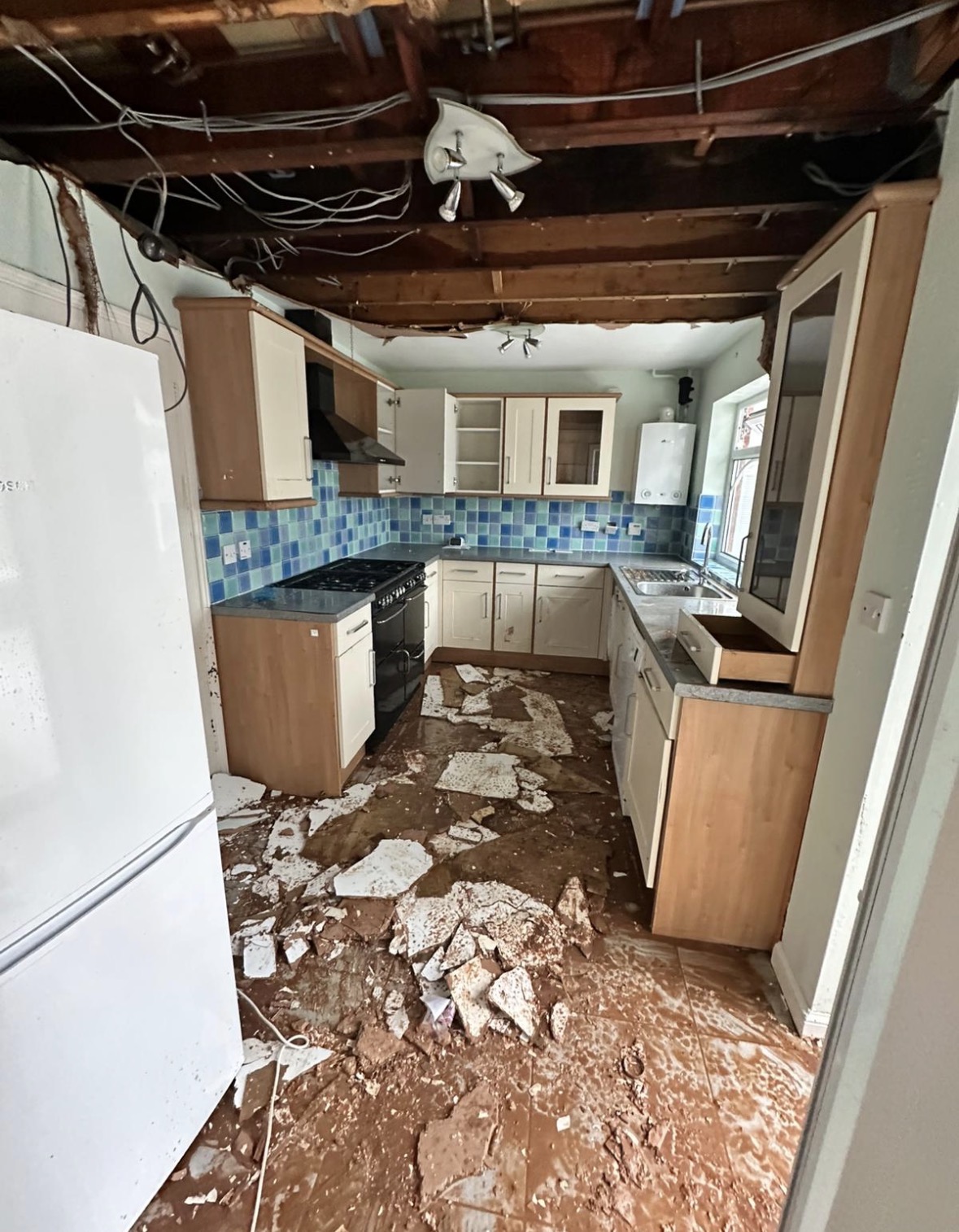
Electrical safety comes first
Ceilings contain light fittings, and water finds them. If water is coming through near a light, a downlight or a ceiling rose, or running down a wall towards sockets, isolate the electricity to that area at the consumer unit.
Only do this if you can reach the consumer unit without standing in water or reaching through a leak. If you cannot, keep everyone away from that part of the property and call an electrician or your supply emergency number.
Do not stand under a sagging ceiling
A bulge in a plasterboard or lath-and-plaster ceiling means water has pooled above it. Saturated plasterboard becomes very heavy and can fail suddenly and completely.
- Clear the room of people and pets and keep the door shut
- Move furniture and belongings out only if you can do so from the edges of the room, safely
- Do not poke, prod or 'release' a bulging ceiling unless you know what is above it and have somewhere for the water to go
- If a large area is sagging, treat the room as out of use until it has been looked at
Find and stop the source if you safely can
Water travels along joists and can appear several metres from where it entered, so the wet patch is not necessarily below the leak. Common sources, roughly in order of how often we see them:
- Bathroom above — a leaking shower tray, failed sealant, an overflowing bath or a waste pipe joint
- Concealed pipework in the floor above, including heating pipes
- A loft tank, overflow or a failed connection in the loft
- A washing machine or dishwasher on the floor above
- A radiator valve or heating pipe connection
- Roof water entering the loft and running along the structure before it drops through
If the water is clean and pressurised, turn off the stopcock. If it appears when someone uses a shower or bath, stop using that room. If it follows rainfall, the source is likely to be the roof or external fabric rather than plumbing.
Contain what is coming through
Buckets and towels are unglamorous but effective. Put down a bucket with a towel in it to stop splashing, protect the floor around it, and lift anything absorbent out of the way. Empty containers before they overflow — a slow drip becomes a lot of water overnight.
Photograph before you clear up
Record now, decide later
- Photograph the ceiling from below, including any staining and bulging
- Photograph the room above and the suspected source if you can see it
- Take a short video showing where the water is coming through
- Note the date, time and what was happening when it started
- Keep any plumber's report or invoice
Why the ceiling void is the real problem
What you can see is the underside of the ceiling. What matters is the space above it — joists, the top of the plasterboard, and very often insulation, which soaks up water and holds it against timber in an unventilated space.
Wiping the ceiling and repainting it does nothing for that. Wet insulation left in place keeps releasing moisture for weeks, produces a musty smell, and creates conditions where mould develops out of sight. Drying a ceiling generally means getting access to the void, removing insulation that will not dry in place, and drying the structure with controlled airflow and dehumidification.
Who to call, and in what order
- An electrician, if water has reached lighting, sockets or the consumer unit
- A plumber, to find and repair the source of the leak
- Your insurer, if you think you may claim — early is usually better
- A drying specialist, to establish how far the water has spread and dry the structure
If you are in a flat and the water is coming from the property above, contact the occupier or the managing agent as soon as you can — the source has to be stopped from their side.
What not to do
- Do not switch lights on in the affected room to 'see better'.
- Do not stand on a ladder underneath a wet ceiling.
- Do not paint over water staining before the structure above has been dried.
- Do not assume a small stain means a small leak — the visible mark is often the last thing to appear.
Common questions
How My HomeDry can help
Related guides
- What to do after a burst pipeA calm, practical order of actions for the first hour — stopping the water, staying safe and recording what happened.
- What actually happens during structural drying?The full process explained step by step — inspection, assessment, extraction, equipment, monitoring and completion.
- Mould after a water leak — why does it happen?Why mould follows delayed or incomplete drying, why cleaning the surface rarely settles it, and what actually resolves it.
This guide provides general property water-damage information from My HomeDry. Individual circumstances differ, and it is not financial, legal or insurance advice. Where an insurance claim is involved, decisions on liability, policy coverage and settlement rest with the insurer under the terms of the individual policy.