

The short answer
Turn off the water at the stopcock if it is safe to reach, switch off electrics to any affected area if water is near sockets, lighting or the consumer unit, move what you can out of the way, then photograph everything before you start clearing up. Once the water has stopped, the priority becomes finding out how far the moisture has travelled — which usually needs more than a look and a feel.
Stop the water — if it is safe to do so
Your internal stopcock is the fastest way to stop most burst pipes. In UK homes it is commonly under the kitchen sink, in a downstairs cloakroom, in an airing cupboard or near where the mains enters the property. Turn it clockwise until it stops.
If the leak is on the hot side or coming from a heating system, also switch the boiler off and, where fitted, close the isolation valves on the affected radiator or appliance. If you cannot find the stopcock or it will not turn, your water supplier can advise on the external stop tap, and an emergency plumber can isolate the supply for you.
Once the supply is off, opening the cold taps downstairs helps drain what is left in the pipework so less water follows the burst.
Electricity comes before belongings
Water and electricity are the part of this that genuinely needs care. If water is running down walls near sockets or switches, dripping into light fittings, or anywhere near the consumer unit, isolate the electricity to that area at the consumer unit — but only if you can reach it without standing in water or reaching through a running leak.
If you cannot get to the consumer unit safely, leave it, keep everyone out of that part of the property and call an electrician or your supply emergency number. Nothing in the room is worth an electric shock.
Protect what you reasonably can
Where it is safe, lift what you can off wet floors — rugs, boxes, electricals, paperwork, anything fabric. Put foil or small blocks under furniture legs so they do not stain damp carpet. Soaking up standing water with towels helps, but do not spend long doing it if the room is unsafe or the ceiling above is sagging.
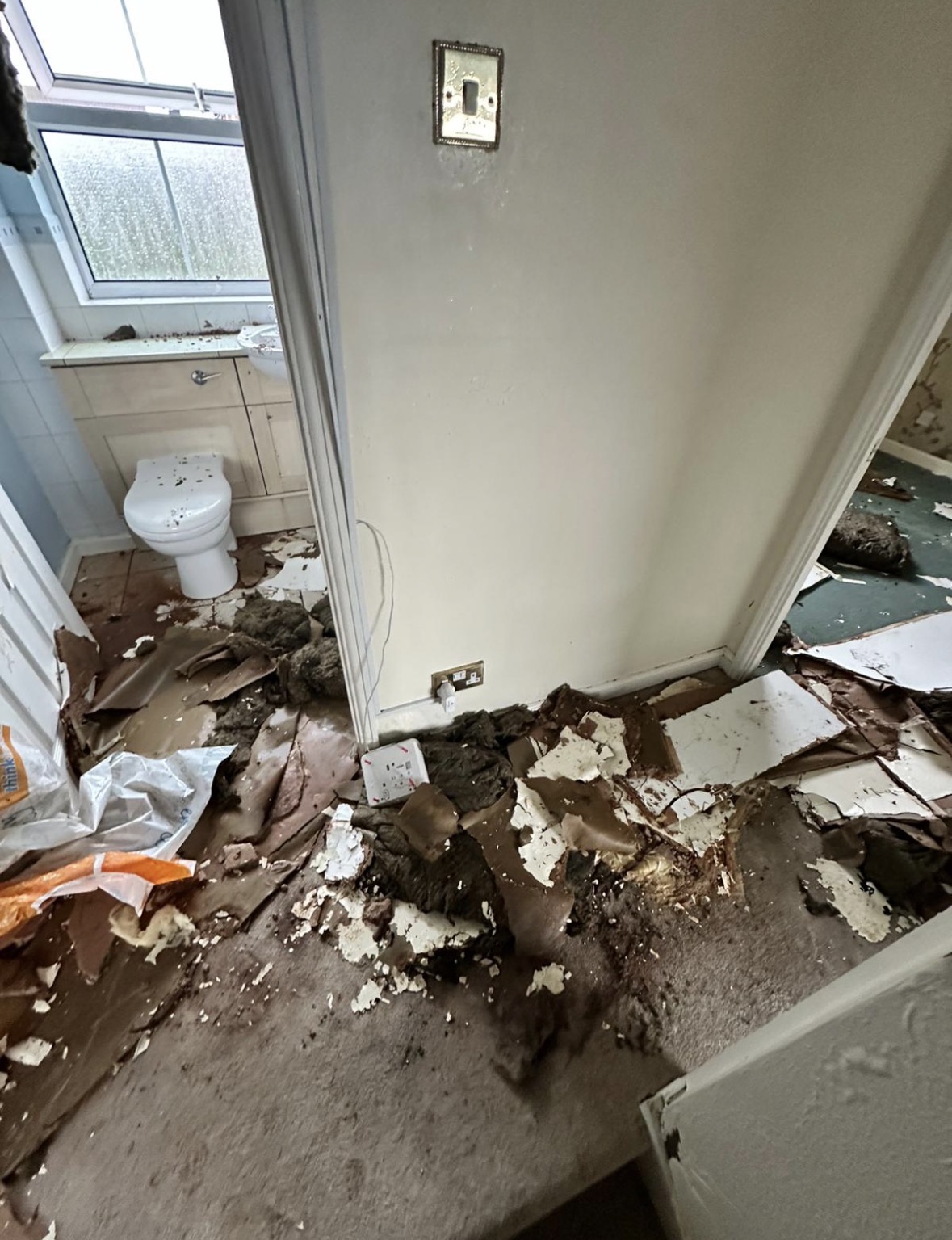
If a ceiling below the leak is bulging or dripping, treat it as unsafe and stay out of the room. A ceiling holding trapped water can come down without much warning.
Photograph and record everything before you tidy
This is the step people most often skip, and the one they later wish they had done. Evidence gathered in the first hour is far more useful than anything recorded a week later, particularly if you decide to make an insurance claim.
Quick evidence checklist
- Wide photographs of each affected room, before you move anything
- Close-ups of the failed pipe, joint or fitting if you can see it
- A short video walking through the property while the damage is fresh
- The date and rough time you discovered the leak
- Photographs of damaged possessions, individually where practical
- Any plumber's invoice, report or note describing the cause
Contacting your insurer
Most UK home insurance policies include cover for sudden escapes of water, but every policy differs and only your insurer can confirm what yours covers. If you think you may claim, it is usually worth telling them early — they will explain their own process and whether they want to appoint anyone.
Keep hold of anything that shows the cause and the damage. Our guide to what information to keep after water damage sets out a simple record to build as you go.
Why water travels further than the damage you can see
Water follows the easiest route, not the shortest. From a single burst it can run along the top of a ceiling, down the cavity of a wall, under skirtings, along joists and into insulation — often emerging in a room that looks nothing to do with the leak.
Plasterboard, timber, insulation, screed and chipboard all hold moisture at different rates, and materials under floors or inside voids dry far more slowly than a surface you can wipe. That is why a room can look and feel fine while the structure around it is still wet.
When a professional moisture assessment helps
If the water was more than a small, quickly-contained spill, it is worth having the extent of the moisture properly established rather than guessed at. An assessment uses moisture meters and, where appropriate, thermal imaging to identify which materials are affected and how far the water has spread, which then sets the drying plan.
My HomeDry carries out that assessment and structural drying for homeowners, landlords and businesses across the East and West Midlands.
What not to do
- Do not use a domestic vacuum cleaner to lift water unless it is specifically a wet-and-dry machine.
- Do not switch electrics back on in an affected area until an electrician has checked them.
- Do not strip out plaster, flooring or ceilings before the damage has been recorded — you may need that evidence.
- Do not simply put the heating on full and shut the doors; that can drive moisture into cooler parts of the building.
- Do not assume it has dried because the surface feels dry to the touch.
Common questions
How My HomeDry can help
Related guides
- Water coming through the ceilingWhat to do right now — safety first, then finding the source, then recording it. Includes when to stay out of the room.
- What actually happens during structural drying?The full process explained step by step — inspection, assessment, extraction, equipment, monitoring and completion.
- Does home insurance cover escape of water?What 'escape of water' usually means on a UK policy, what tends to be covered, and what to have ready before you call your insurer.
This guide provides general property water-damage information from My HomeDry. Individual circumstances differ, and it is not financial, legal or insurance advice. Where an insurance claim is involved, decisions on liability, policy coverage and settlement rest with the insurer under the terms of the individual policy.