
Dehumidification and Air Movement
Dehumidifiers remove moisture from the air, while air movers increase airflow across wet surfaces and through selected spaces. Used together, they support evaporation and moisture collection during a controlled drying programme.
Equipment should be selected for the property, affected materials, temperature, air volume and available power. More equipment is not automatically better; positioning, containment and monitoring determine whether it is effective.
What to expect from the equipment
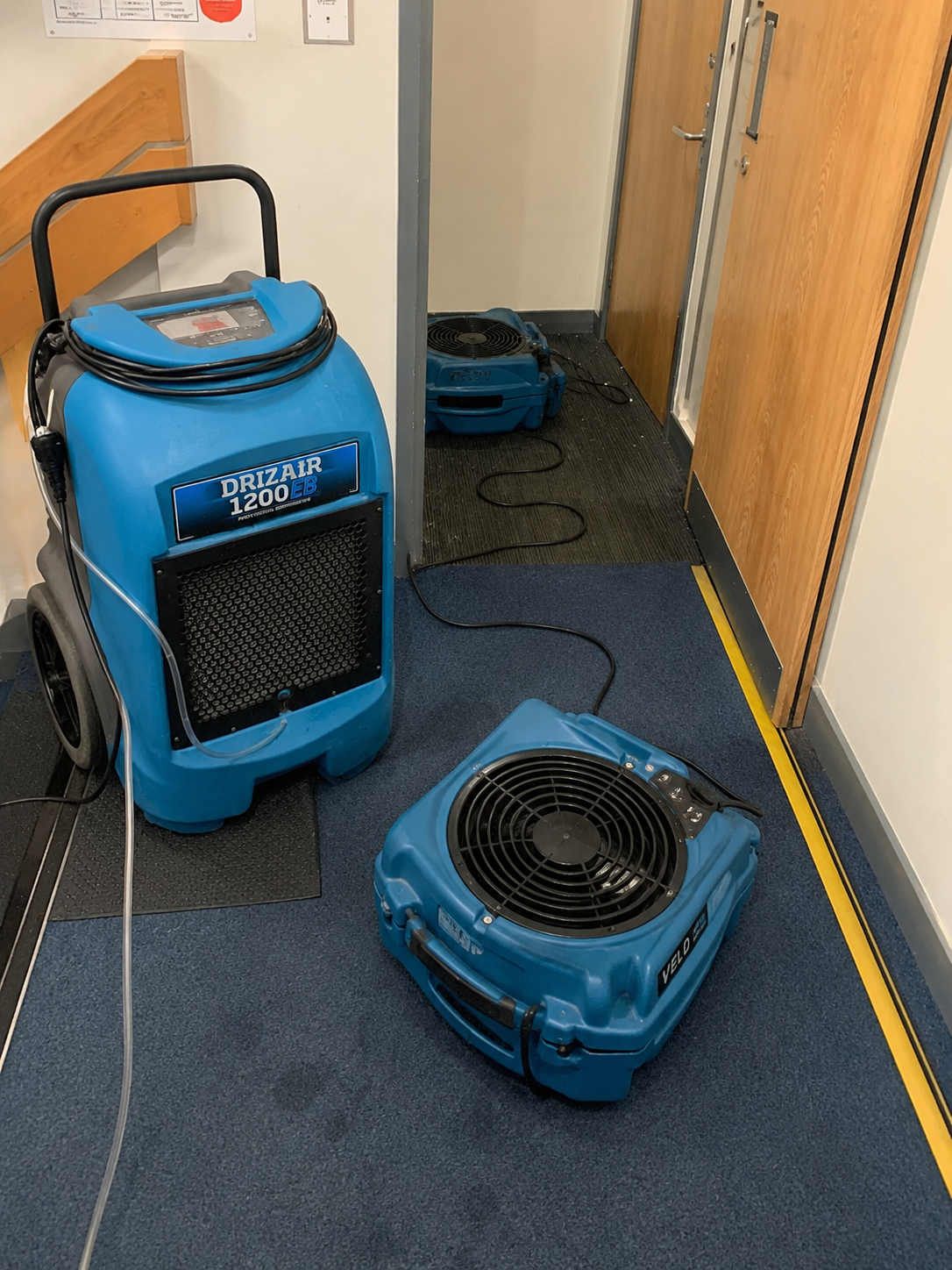
Drying equipment can create warmth, airflow and continuous background noise. It may need to run for long periods, and condensate drainage or regular water collection must be arranged.
Why windows and doors matter
Unplanned ventilation can reduce dehumidifier efficiency by bringing additional humid air into the drying zone. Doors, windows and containment should be managed according to the agreed plan.
Do not move equipment without agreement
Moving an air mover or dehumidifier can leave a wet area untreated or disrupt the measured drying zone. Contact My HomeDry if access, noise or heat becomes a problem.
Professional drying equipment prepared for deployment
Equipment selection and positioning vary with the size of the affected area, building materials, moisture load, access and available power.
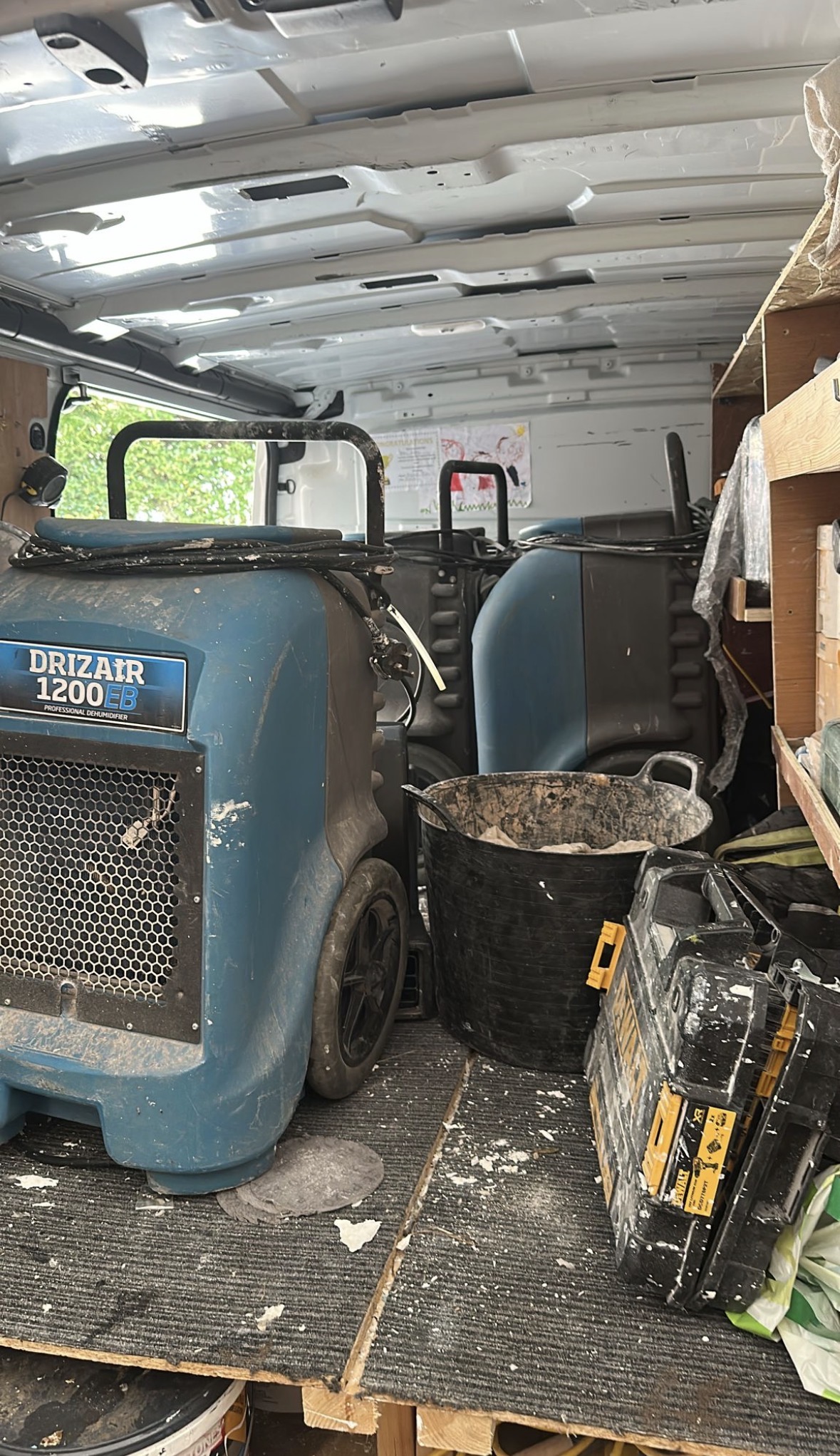
How the equipment is arranged on site
- Dehumidifier — removes moisture from the surrounding air.
- Air mover — increases airflow across affected surfaces.
- Drainage hose — condensate routed to an appropriate outlet.
- Power and cabling — planned around occupied use and safety.
- Positioning — directed at the surfaces requiring the greatest air movement, then reviewed at monitoring visits.
Discuss this situation with My HomeDry
Call with the property postcode, source of water and areas affected.
Frequently asked questions
Helpful guides
- Should you use a dehumidifier after a leak?What a dehumidifier really does, when it helps, and why putting one in the middle of a room is rarely enough on its own.
- What actually happens during structural drying?The full process explained step by step — inspection, assessment, extraction, equipment, monitoring and completion.
Where My HomeDry works
My HomeDry is based in Sutton Coldfield and provides specialist water damage restoration and structural drying primarily across the West Midlands. Commercial, managed-property and insurance-related instructions are also considered more widely across the Midlands. Attendance depends on the property location, incident requirements and current operational capacity.
Discuss professional drying equipment
Call My HomeDry to arrange assessment, equipment planning and monitored drying.