

Moisture Mapping and Monitored Drying
Moisture mapping records conditions at defined points so drying progress can be judged consistently over time. It replaces guesswork with a repeatable record of where readings were taken, how they changed and whether the drying plan needs adjustment.
My HomeDry establishes baseline positions, records environmental conditions where relevant and revisits the same areas throughout the programme. The data is interpreted alongside the construction, materials and access available.
Why repeat positions matter
A reading taken in a different place may not be comparable. Marked or documented positions allow changes to be assessed against the same material and location.
When progress slows
A plateau can indicate restricted airflow, a concealed reservoir, continued water entry, unsuitable equipment positioning or a material that cannot reasonably be dried in place. The next step is based on investigation rather than simply extending the programme.
What appears in a monitoring record
Records may include the date, room, material, position, reading type, environmental conditions, equipment changes, access issues and observations affecting the drying decision.
Recording consistent monitoring points
- Positions are selected and recorded.
- The same areas are revisited during monitoring visits.
- Results are compared with reference areas and earlier readings.
- Equipment decisions may change as the trend develops.
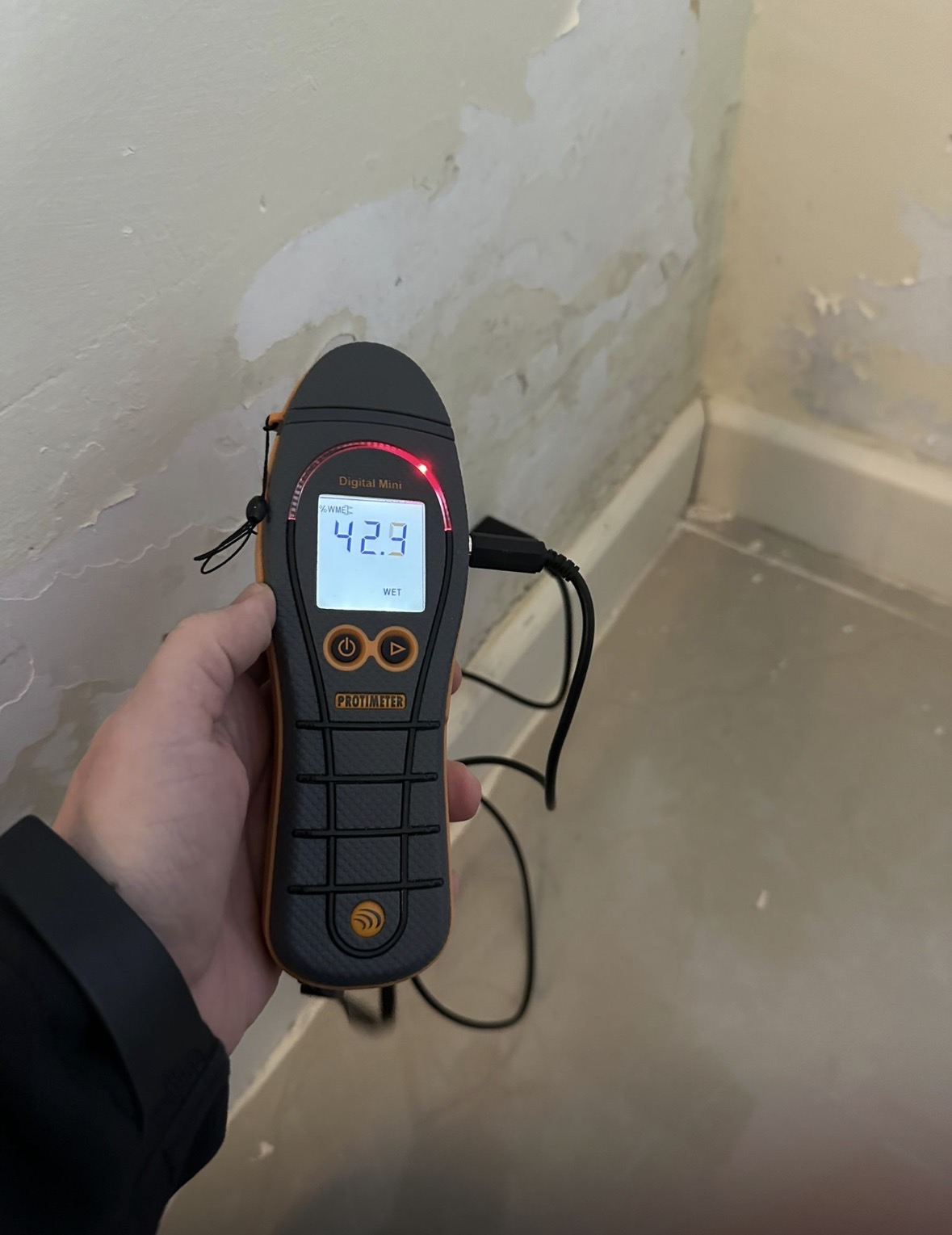
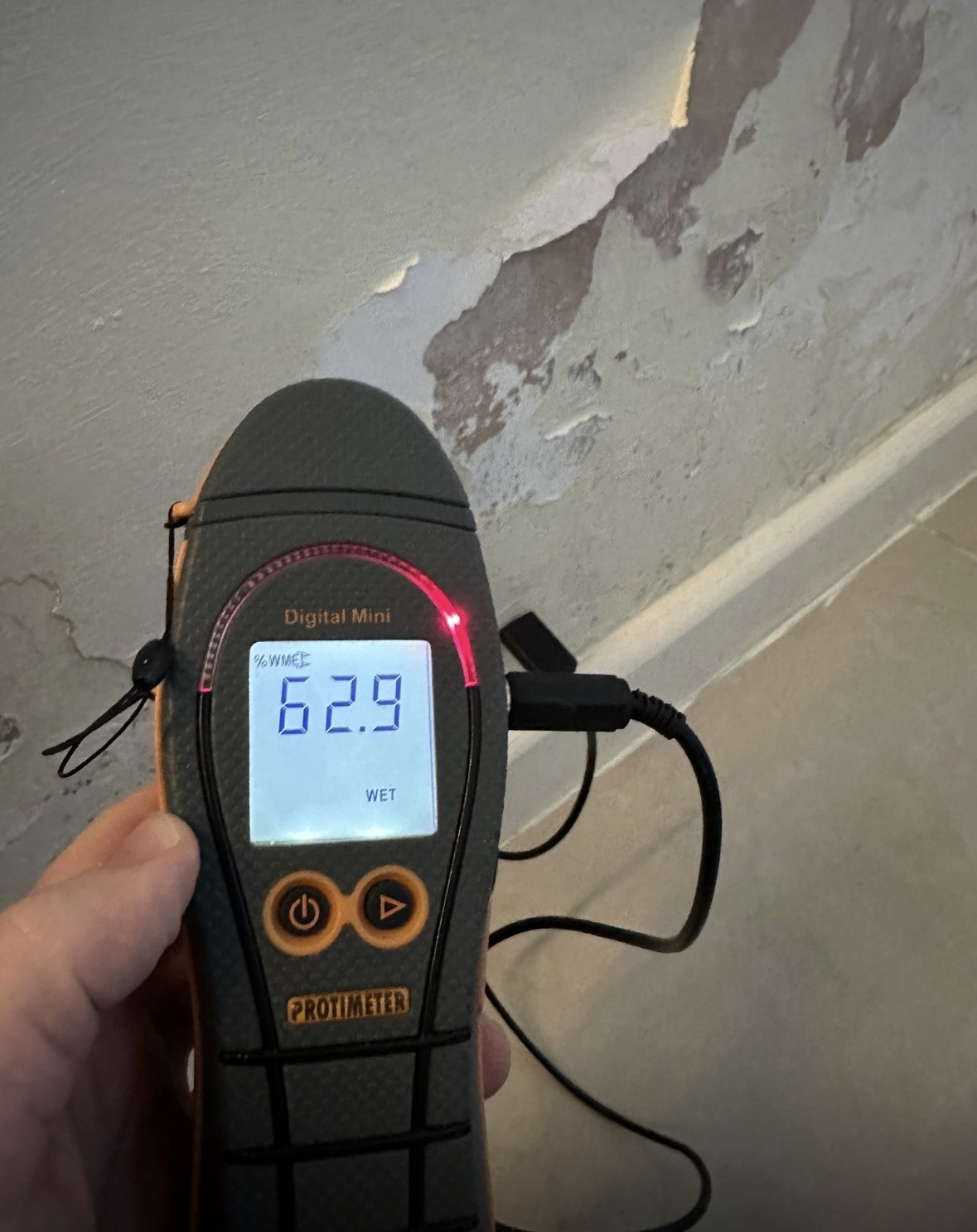
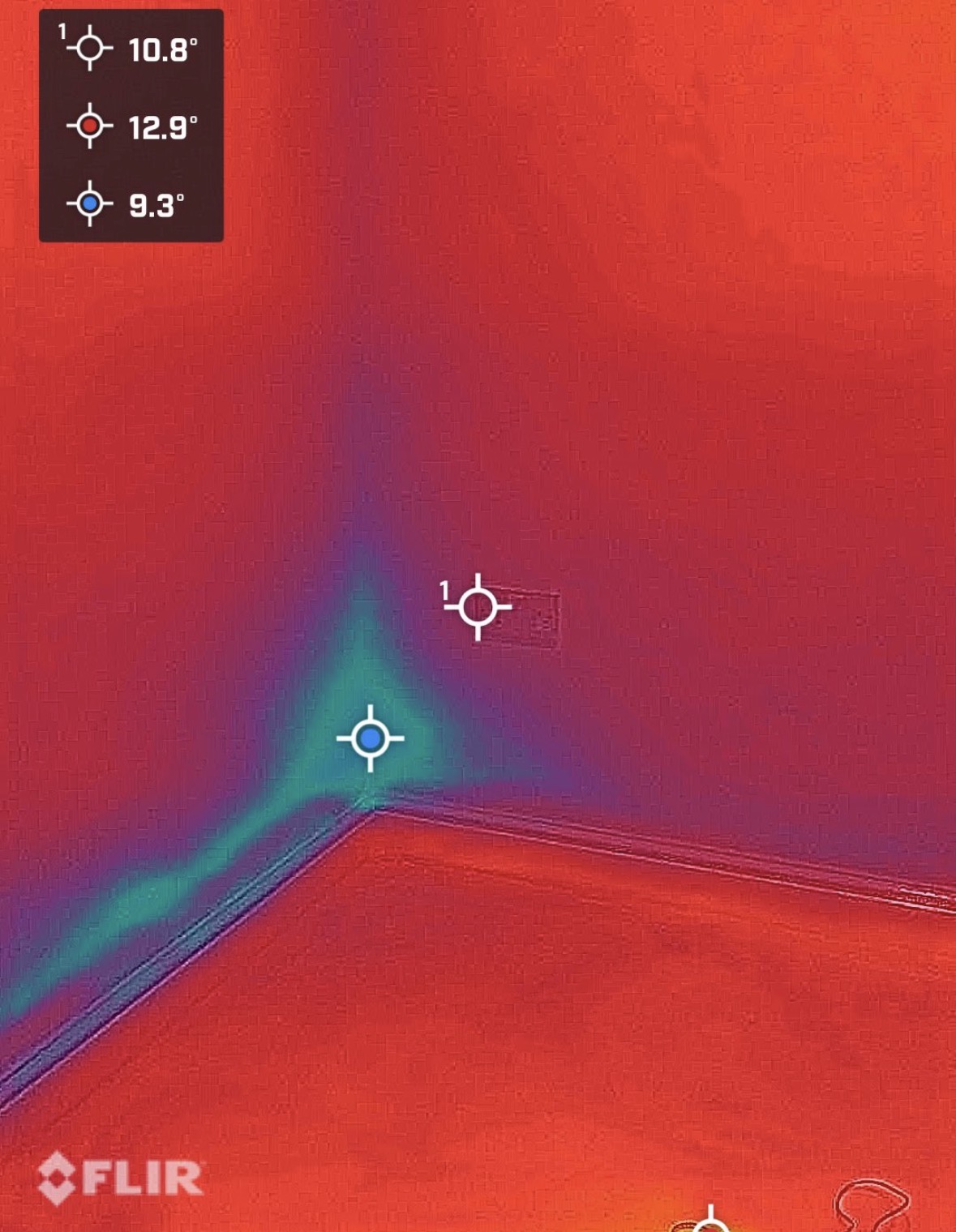
Technical note. WME means wood moisture equivalent. On non-wood building materials it is used as a comparative reference reading and is not the actual percentage of water contained in plaster, masonry or screed. Thermal imaging highlights temperature differences that may indicate moisture; it does not prove moisture on its own.
Discuss this situation with My HomeDry
Call with the property postcode, source of water and areas affected.
Frequently asked questions
Helpful guides
- How long does a house take to dry after a leak?Why there is no single answer, what actually changes the timescale, and why 'it feels dry' is not the same as dry.
- How can you tell if a wall is still wet?The visible signs worth noticing, what they do and do not prove, and why appearance alone is an unreliable test.
Proof of work
Related case studies
Completed projects involving this type of water damage.
Where My HomeDry works
My HomeDry is based in Sutton Coldfield and provides specialist water damage restoration and structural drying primarily across the West Midlands. Commercial, managed-property and insurance-related instructions are also considered more widely across the Midlands. Attendance depends on the property location, incident requirements and current operational capacity.
Need a monitored drying programme?
Speak to My HomeDry about the property, affected materials and reporting requirements.