

The short answer
Look for staining or tide marks, patches that feel noticeably cooler, peeling or bubbling paint, soft or crumbling plaster, a musty smell, white salt deposits, or mould in corners and behind furniture. Any of these suggest moisture — but none of them prove a wall is dry when absent. Comparative moisture readings against an unaffected wall in the same property are the only dependable check.
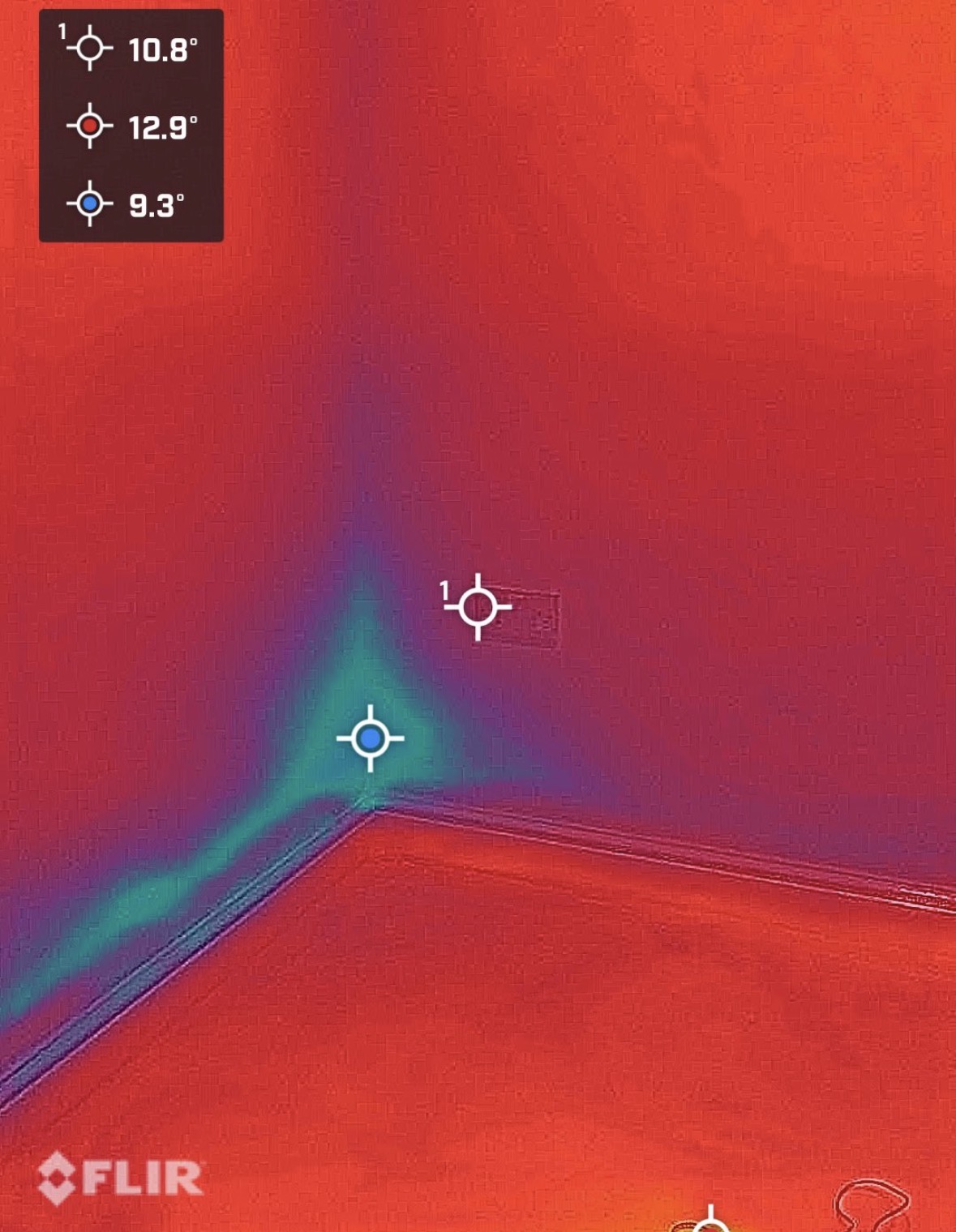
Signs worth paying attention to
- Staining or a tide mark, often darker at the bottom and fading upward
- Patches that feel cooler than the surrounding wall — evaporation removes heat
- Paint peeling, blistering or bubbling, particularly on emulsion over plaster
- Wallpaper lifting at seams or in patches
- Plaster that feels soft, chalky or crumbles at a fingertip
- A persistent musty or earthy smell in the room
- White powdery or crystalline deposits on the surface — salts brought out by moisture
- Mould appearing in corners, behind furniture or along the base of the wall
- Skirting boards that have swollen, lifted or pulled away
What those signs do and do not tell you
Signs are useful because they point to where to investigate. They are unreliable as proof for two reasons. First, some of them persist after drying is finished — a stain does not disappear just because the wall behind it is dry. Second, and more importantly, a wall can look and feel entirely normal while the plaster, masonry or insulation behind it is still holding a lot of water.
Salts are a good example. Once moisture has drawn salts to the surface, they stay there and can attract dampness from the air, which makes an area feel damp long after the underlying problem is resolved.
Why the surface dries first
Evaporation happens where the material meets the air, so the outer few millimetres lose moisture quickly while the depth behind releases it far more slowly. Solid masonry walls hold the most and take longest; plasterboard on studwork dries faster on its face but can trap moisture in the cavity and any insulation behind it.
This is why a wall repeatedly appears to dry, gets redecorated, and then shows staining again a few weeks later as moisture from behind reaches the new surface.
Consumer moisture meters — useful, but easy to misread
An inexpensive pin-type meter can give you a rough indication, and it is better than guessing. But these instruments respond to electrical conductivity, which is affected by more than water: salts, metal fixings, foil-backed plasterboard, certain adhesives and even surface contamination can all produce a high reading on a dry wall.
Equally, a low reading at the surface says nothing about depth. If you use one, take readings across the whole wall and compare with an unaffected wall of the same construction. Treat the numbers as a comparison, not an absolute measure of water content.
How a professional assessment differs
The difference is method rather than magic. A proper assessment identifies the wall construction first, takes readings in a consistent grid across affected and unaffected areas, records them so change over time can be tracked, and uses thermal imaging where helpful to highlight temperature patterns that suggest where moisture has spread.
Technical note: comparative readings on plaster, masonry and similar non-wood materials are reference values used for comparison and tracking. Thermal imaging shows temperature differences that may indicate moisture; it does not prove moisture on its own.
The target is not a magic number — it is a set of readings consistent with equivalent unaffected areas of that same building.
Before you redecorate
The most expensive mistake after water damage is decorating too early. New plaster over a wet background will often blow, and fresh paint over damp plaster tends to peel. If there is any doubt, having the wall checked costs far less than doing the work twice.
What not to do
- Do not paint or wallpaper over a stain to see whether it comes back.
- Do not rely on a single meter reading in one spot.
- Do not use a stain-block as a substitute for confirming the wall is dry.
- Do not push furniture back against a wall that is still drying — it restricts airflow and encourages mould.
Common questions
How My HomeDry can help
Related guides
- Should you use a dehumidifier after a leak?What a dehumidifier really does, when it helps, and why putting one in the middle of a room is rarely enough on its own.
- What actually happens during structural drying?The full process explained step by step — inspection, assessment, extraction, equipment, monitoring and completion.
- Mould after a water leak — why does it happen?Why mould follows delayed or incomplete drying, why cleaning the surface rarely settles it, and what actually resolves it.
This guide provides general property water-damage information from My HomeDry. Individual circumstances differ, and it is not financial, legal or insurance advice. Where an insurance claim is involved, decisions on liability, policy coverage and settlement rest with the insurer under the terms of the individual policy.